Autobiography Of A Yogi
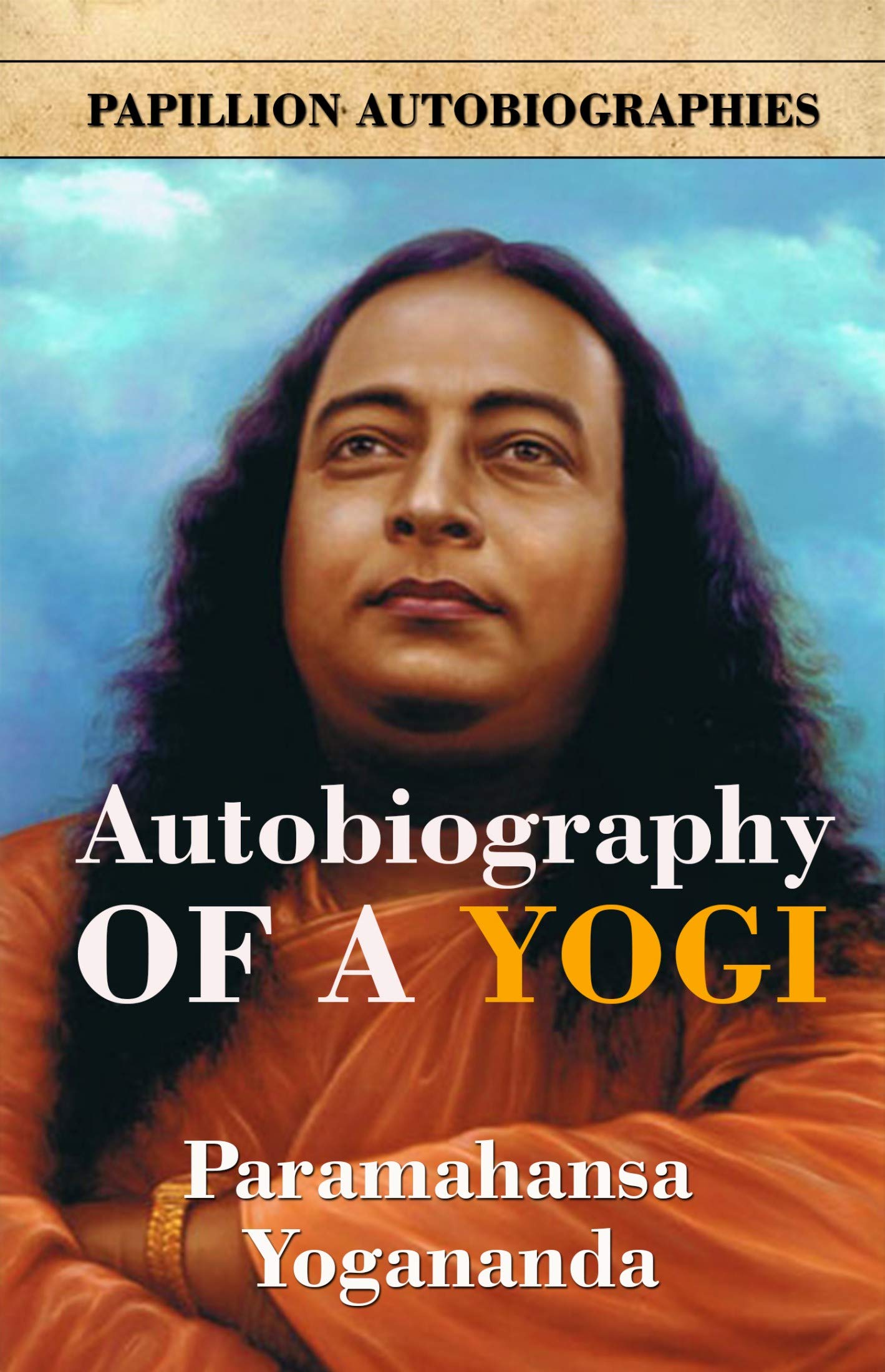
Metadata
- Title: Autobiography Of A Yogi
- Author: Paramhansa Yogananda
- Book URL: https://amazon.com/dp/B089FJR1DL?tag=malvaonlin-20
- Open in Kindle: kindle://book/?action=open&asin=B089FJR1DL
- Last Updated on: Tuesday, August 30, 2022
Highlights & Notes
“Why be elated by material profit?” Father replied. “The one who pursues a goal of evenmindedness is neither jubilant with gain nor depressed by loss. He knows that man arrives penniless in this world, and departs without a single rupee.”
“To every thing there is a season, and a time to every purpose under the heaven.”
“God is simple. Everything else is complex. Do not seek absolute values in the relative world of nature.”
“I have long exercised an honest introspection, the exquisitely painful approach to wisdom. Self-scrutiny, relentless observance of one’s thoughts, is a stark and shattering experience. It pulverizes the stoutest ego. But true self-analysis mathematically operates to produce seers.
Thoughtless is the man who buries his ideals, surrendering to the common fate. Can he seem other than impotent, wooden, ignominious?”
“The one who practices a scalpel self-dissection will know an expansion of universal pity. Release is given him from the deafening demands of his ego. The love of God flowers on such soil. The creature finally turns to his Creator, if for no other reason than to ask in anguish: ‘Why, Lord, why?’ By ignoble whips of pain, man is driven at last into the Infinite Presence, whose beauty alone should lure him.”
Worldly people do not like the candor which shatters their delusions.
“God plants his saints sometimes in unexpected soil, lest we think we may reduce Him to a rule!”
“You go often into the silence, but have you developed anubhava?“46 He was reminding me to love God more than meditation. “Do not mistake the technique for the Goal.”
“People in general are more fond of Jala Yoga (union with food) than of Dhyana Yoga (union with God).”
Is that a sacrifice? The shortsighted worldly folk are verily the real renunciates! They relinquish an unparalleled divine possession for a poor handful of earthly toys!”
“The poet is intimate with truth, while the scientist approaches awkwardly.
All creative scientists know that the true laboratory is the mind, where behind illusions they uncover the laws of truth.
The scientist seldom knows contemporaneous reward; it is enough to possess the joy of creative service.”
“Die then!” This alarming counsel split the air. “Die if you must Mukunda! Never admit that you live by the power of food and not by the power of God! He who has created every form of nourishment, He who has bestowed appetite, will certainly see that His devotee is sustained! Do not imagine that rice maintains you, or that money or men support you! Could they aid if the Lord withdraws your life-breath? They are His indirect instruments merely. Is it by any skill of yours that food digests in your stomach? Use the sword of your discrimination, Mukunda! Cut through the chains of agency and perceive the Single Cause!” I found his incisive words entering some deep marrow. Gone was an age- old delusion by which bodily imperatives outwit the soul. There and then I tasted the Spirit’s all-sufficiency. In how many strange cities, in my later life of ceaseless travel, did occasion arise to prove the serviceability of this lesson in a Benares hermitage!
“Ordinary love is selfish, darkly rooted in desires and satisfactions. Divine love is without condition, without boundary, without change. The flux of the human heart is gone forever at the transfixing touch of pure love.” He added humbly, “If ever you find me falling from a state of God-realization, please promise to put my head on your lap and help to bring me back to the Cosmic Beloved we both worship.”
How short is human memory for divine favors! No man lives who has not seen certain of his prayers granted.
“I will tell you a few-each one with a moral!” Sri Yukteswar’s eyes twinkled with his warning. “My mother once tried to frighten me with an appalling story of a ghost in a dark chamber. I went there immediately, and expressed my disappointment at having missed the ghost. Mother never told me another horror-tale. Moral: Look fear in the face and it will cease to trouble you.
Moral: Attachment is blinding; it lends an imaginary halo of attractiveness to the object of desire.
“A third story concerns the plasticity of the youthful mind. I heard my mother remark occasionally: ‘A man who accepts a job under anyone is a slave.’ That impression became so indelibly fixed that even after my marriage I refused all positions. I met expenses by investing my family endowment in land. Moral: Good and positive suggestions should instruct the sensitive ears of children. Their early ideas long remain sharply etched.”
“‘Really, it has been your thoughts that have made you feel alternately weak and strong.’ My master looked at me affectionately. ‘You have seen how your health has exactly followed your expectations. Thought is a force, even as electricity or gravitation. The human mind is a spark of the almighty consciousness of God. I could show you that whatever your powerful mind believes very intensely would instantly come to pass.’
“All creation is governed by law,” Sri Yukteswar concluded. “The ones which manifest in the outer universe, discoverable by scientists, are called natural laws. But there are subtler laws ruling the realms of consciousness which can be known only through the inner science of yoga. The hidden spiritual planes also have their natural and lawful principles of operation. It is not the physical scientist but the fully self-realized master who comprehends the true nature of matter. Thus Christ was able to restore the servant’s ear after it had been severed by one of the disciples.”
“A man of realization does not perform any miracle until he receives an inward sanction,” Master explained. “God does not wish the secrets of His creation revealed promiscuously.82 Also, every individual in the world has inalienable right to his free will. A saint will not encroach upon that independence.”
“In shallow men the fish of little thoughts cause much commotion. In oceanic minds the whales of inspiration make hardly a ruffle.” This observation from the Hindu scriptures is not without discerning humor.
“Forget the past,” Sri Yukteswar would console him. “The vanished lives of all men are dark with many shames. Human conduct is ever unreliable until anchored in the Divine. Everything in future will improve if you are making a spiritual effort now.”
“Physicians must carry on their work of healing through God’s laws as applied to matter.” But he extolled the superiority of mental therapy, and often repeated: “Wisdom is the greatest cleanser.”
“The body is a treacherous friend. Give it its due; no more,” he said. “Pain and pleasure are transitory; endure all dualities with calmness, while trying at the same time to remove their hold. Imagination is the door through which disease as well as healing enters. Disbelieve in the reality of sickness even when you are ill; an unrecognized visitor will flee!”
“Good manners without sincerity are like a beautiful dead lady,” he remarked on suitable occasion. “Straightforwardness without civility is like a surgeon’s knife, effective but unpleasant. Candor with courtesy is helpful and admirable.”
“So long as you breathe the free air of earth, you are under obligation to render grateful service. He alone who has fully mastered the breathless state86 is freed from cosmic imperatives. I will not fail to let you know when you have attained the final perfection.”
“If you don’t like my words, you are at liberty to leave at any time,” Master assured me. “I want nothing from you but your own improvement. Stay only if you feel benefited.”
For every humbling blow he dealt my vanity, for every tooth in my metaphorical jaw he knocked loose with stunning aim, I am grateful beyond any facility of expression. The hard core of human egotism is hardly to be dislodged except rudely. With its departure, the Divine finds at last an unobstructed channel. In vain It seeks to percolate through flinty hearts of selfishness.
When I had abandoned underlying resentment, I found a marked decrease in my chastisement. In a very subtle way, Master melted into comparative clemency. In time I demolished every wall of rationalization and subconscious reservation behind which the human personality generally shields itself.87 The reward was an effortless harmony with my guru. I discovered him then to be trusting, considerate, and silently loving. Undemonstrative, however, he bestowed no word of affection.
“Just as the purpose of eating is to satisfy hunger, not greed, so the sex instinct is designed for the propagation of the species according to natural law, never for the kindling of insatiable longings,” he said. “Destroy wrong desires now; otherwise they will follow you after the astral body is torn from its physical casing. Even when the flesh is weak, the mind should be constantly resistant. If temptation assails you with cruel force, overcome it by impersonal analysis and indomitable will. Every natural passion can be mastered.
“Conserve your powers. Be like the capacious ocean, absorbing within all the tributary rivers of the senses. Small yearnings are openings in the reservoir of your inner peace, permitting healing waters to be wasted in the desert soil of materialism. The forceful activating impulse of wrong desire is the greatest enemy to the happiness of man. Roam in the world as a lion of self-control; see that the frogs of weakness don’t kick you around.”
“To seek the Lord, one need not disfigure his face,” he would remark. “Remember that finding God will mean the funeral of all sorrows.”
For the first time, perhaps, he understood that discerning placement of the comma does not atone for a spiritual coma.
“They prefer philosophy to be a gentle intellectual setting-up exercise. Their elevated thoughts are carefully unrelated either to the crudity of outward action or to any scourging inner discipline!”
“Do not confuse understanding with a larger vocabulary,” he remarked. “Sacred writings are beneficial in stimulating desire for inward realization, if one stanza at a time is slowly assimilated. Continual intellectual study results in vanity and the false satisfaction of an undigested knowledge.”
“Wisdom is not assimilated with the eyes, but with the atoms,” he said. “When your conviction of a truth is not merely in your brain but in your being, you may diffidently vouch for its meaning.” He discouraged any tendency a student might have to construe book-knowledge as a necessary step to spiritual realization.
“Some people try to be tall by cutting off the heads of others!”
As soon as the devotee is willing to go even to the ends of the earth for spiritual enlightenment, his guru appears near-by.”
“No, of course not! Wrath springs only from thwarted desires. I do not expect anything from others, so their actions cannot be in opposition to wishes of mine. I would not use you for my own ends; I am happy only in your own true happiness.”
My body became immovably rooted; breath was drawn out of my lungs as if by some huge magnet. Soul and mind instantly lost their physical bondage, and streamed out like a fluid piercing light from my every pore. The flesh was as though dead, yet in my intense awareness I knew that never before had I been fully alive. My sense of identity was no longer narrowly confined to a body, but embraced the circumambient atoms. People on distant streets seemed to be moving gently over my own remote periphery. The roots of plants and trees appeared through a dim transparency of the soil; I discerned the inward flow of their sap.
Master, I knew, was teaching me the secret of balanced living. The soul must stretch over the cosmogonic abysses, while the body performs its daily duties.
The cosmic vision left many permanent lessons. By daily stilling my thoughts, I could win release from the delusive conviction that my body was a mass of flesh and bones, traversing the hard soil of matter. The breath and the restless mind, I saw, were like storms which lashed the ocean of light into waves of material forms-earth, sky, human beings, animals, birds, trees. No perception of the Infinite as One Light could be had except by calming those storms. As often as I silenced the two natural tumults, I beheld the multitudinous waves of creation melt into one lucent sea, even as the waves of the ocean, their tempests subsiding, serenely dissolve into unity.
“Outward longings drive us from the Eden within; they offer false pleasures which only impersonate soul-happiness. The lost paradise is quickly regained through divine meditation. As God is unanticipatory Ever-Newness, we never tire of Him. Can we be surfeited with bliss, delightfully varied throughout eternity?”
“That is true; but He is also near and dear. After the mind has been cleared by Kriya Yoga of sensory obstacles, meditation furnishes a twofold proof of God. Ever-new joy is evidence of His existence, convincing to our very atoms. Also, in meditation one finds His instant guidance, His adequate response to every difficulty.”
“Human life is beset with sorrow until we know how to tune in with the Divine Will, whose ‘right course’ is often baffling to the egoistic intelligence. God bears the burden of the cosmos; He alone can give unerring counsel.”
“Divine contemplation must not be made an excuse for material carelessness.
Intuition101 is soul guidance, appearing naturally in man during those instants when his mind is calm. Nearly everyone has had the experience of an inexplicably correct “hunch,” or has transferred his thoughts effectively to another person. The human mind, free from the static of restlessness, can perform through its antenna of intuition all the functions of complicated radio mechanisms-sending and receiving thoughts, and tuning out undesirable ones. As the power of a radio depends on the amount of electrical current it can utilize, so the human radio is energized according to the power of will possessed by each individual. All thoughts vibrate eternally in the cosmos. By deep concentration, a master is able to detect the thoughts of any mind, living or dead. Thoughts are universally and not individually rooted; a truth cannot be created, but only perceived. The erroneous thoughts of man result from imperfections in his discernment. The goal of yoga science is to calm the mind, that without distortion it may mirror the divine vision in the universe.
“It is assumed that the phenomena which we now accept without surprise, do not excite our astonishment because they are understood. But this is not the case. If they do not surprise us it is not because they are understood, it is because they are familiar; for if that which is not understood ought to surprise us, we should be surprised at everything-the fall of a stone thrown into the air, the acorn which becomes an oak, mercury which expands when it is heated, iron attracted by a magnet, phosphorus which burns when it is rubbed… . The science of today is a light matter; the revolutions and evolutions which it will experience in a hundred thousand years will far exceed the most daring anticipations. The truths-those surprising, amazing, unforeseen truths-which our descendants will discover, are even now all around us, staring us in the eyes, so to speak, and yet we do not see them. But it is not enough to say that we do not see them; we do not wish to see them; for as soon as an unexpected and unfamiliar fact appears, we try to fit it into the framework of the commonplaces of acquired knowledge, and we are indignant that anyone should dare to experiment further.”
My guru smiled affectionately. “Tonight you have conquered fatigue and fear of hard work; you shall never be bothered by them in the future.”
“It is never a question of belief ; the only scientific attitude one can take on any subject is whether it is true . The law of gravitation worked as efficiently before Newton as after him. The cosmos would be fairly chaotic if its laws could not operate without the sanction of human belief.
“All parts of creation are linked together and interchange their influences. The balanced rhythm of the universe is rooted in reciprocity,” my guru continued. “Man, in his human aspect, has to combat two sets of forces-first, the tumults within his being, caused by the admixture of earth, water, fire, air, and ethereal elements; second, the outer disintegrating powers of nature. So long as man struggles with his mortality, he is affected by the myriad mutations of heaven and earth.
What he has done, he can undo. None other than himself was the instigator of the causes of whatever effects are now prevalent in his life. He can overcome any limitation, because he created it by his own actions in the first place, and because he has spiritual resources which are not subject to planetary pressure.
“Man is a soul, and has a body. When he properly places his sense of identity, he leaves behind all compulsive patterns. So long as he remains confused in his ordinary state of spiritual amnesia, he will know the subtle fetters of environmental law.
“All human ills arise from some transgression of universal law.
“The deeper the self-realization of a man, the more he influences the whole universe by his subtle spiritual vibrations, and the less he himself is affected by the phenomenal flux.”
The starry inscription at one’s birth, I came to understand, is not that man is a puppet of his past. Its message is rather a prod to pride; the very heavens seek to arouse man’s determination to be free from every limitation. God created each man as a soul, dowered with individuality, hence essential to the universal structure, whether in the temporary role of pillar or parasite. His freedom is final and immediate, if he so wills; it depends not on outer but inner victories.
Reason and feeling remain in a heaven of cooperative joy so long as the human mind is not tricked by the serpentine energy of animal propensities.
Jesus signified himself as a ransom for the sins of many. With his divine powers,136 his body could never have been subjected to death by crucifixion if he had not willingly cooperated with the subtle cosmic law of cause and effect. He thus took on himself the consequences of others’ karma, especially that of his disciples. In this manner they were highly purified and made fit to receive the omnipresent consciousness which later descended on them.
“Where there is duality by virtue of ignorance, one sees all things as distinct from the Self. When everything is seen as the Self, then there is not even an atom other than the Self… .
“As soon as the knowledge of the Reality has sprung up, there can be no fruits of past actions to be experienced, owing to the unreality of the body, in the same way as there can be no dream after waking.”
‘If you don’t invite God to be your summer Guest, He won’t come in the winter of your life.‘”
The Creator, in taking infinite pains to shroud with mystery His presence in every atom of creation, could have had but one motive-a sensitive desire that men seek Him only through free will. With what velvet glove of every humility has He not covered the iron hand of omnipotence!
Yoga is a method for restraining the natural turbulence of thoughts, which otherwise impartially prevent all men, of all lands, from glimpsing their true nature of Spirit. Yoga cannot know a barrier of East and West any more than does the healing and equitable light of the sun. So long as man possesses a mind with its restless thoughts, so long will there be a universal need for yoga or control.
The common thread linking all six systems is the declaration that no true freedom for man is possible without knowledge of the ultimate Reality.
Through the practical techniques of yoga, man leaves behind forever the barren realms of speculation and cognizes in experience the veritable Essence.
“Every religious or philosophical practice means a psychological discipline, that is, a method of mental hygiene.
The ancient yogic technique converts the breath into mind. By spiritual advancement, one is able to cognize the breath as an act of mind-a dream-breath.
The rejuvenating effects of sleep are due to man’s temporary unawareness of body and breathing. The sleeping man becomes a yogi; each night he unconsciously performs the yogic rite of releasing himself from bodily identification, and of merging the life force with healing currents in the main brain region and the six sub-dynamos of his spinal centers. The sleeper thus dips unknowingly into the reservoir of cosmic energy which sustains all life.
Untying the cord of breath which binds the soul to the body, Kriya serves to prolong life and enlarge the consciousness to infinity. The yoga method overcomes the tug of war between the mind and the matter- bound senses, and frees the devotee to reinherit his eternal kingdom. He knows his real nature is bound neither by physical encasement nor by breath, symbol of the mortal enslavement to air, to nature’s elemental compulsions.
Introspection, or “sitting in the silence,” is an unscientific way of trying to force apart the mind and senses, tied together by the life force. The contemplative mind, attempting its return to divinity, is constantly dragged back toward the senses by the life currents. Kriya, controlling the mind directly through the life force, is the easiest, most effective, and most scientific avenue of approach to the Infinite. In contrast to the slow, uncertain “bullock cart” theological path to God, Kriya may justly be called the “airplane” route.
The yogic science is based on an empirical consideration of all forms of concentration and meditation exercises. Yoga enables the devotee to switch off or on, at will, life current from the five sense telephones of sight, sound, smell, taste, and touch. Attaining this power of sense-disconnection, the yogi finds it simple to unite his mind at will with divine realms or with the world of matter. No longer is he unwillingly brought back by the life force to the mundane sphere of rowdy sensations and restless thoughts. Master of his body and mind, the Kriya Yogi ultimately achieves victory over the “last enemy,” death.
Identifying himself with a shallow ego, man takes for granted that it is he who thinks, wills, feels, digests meals, and keeps himself alive, never admitting through reflection (only a little would suffice!) that in his ordinary life he is naught but a puppet of past actions (karma) and of nature or environment. Each man’s intellectual reactions, feelings, moods, and habits are circumscribed by effects of past causes, whether of this or a prior life. Lofty above such influences, however, is his regal soul. Spurning the transitory truths and freedoms, the Kriya Yogi passes beyond all disillusionment into his unfettered Being. All scriptures declare man to be not a corruptible body, but a living soul; by Kriya he is given a method to prove the scriptural truth.
The advanced yogi, withholding all his mind, will, and feeling from false identification with bodily desires, uniting his mind with superconscious forces in the spinal shrines, thus lives in this world as God hath planned, not impelled by impulses from the past nor by new witlessnesses of fresh human motivations. Such a yogi receives fulfillment of his Supreme Desire, safe in the final haven of inexhaustibly blissful Spirit.
He added, “God is the Honey, organizations are the hives; both are necessary. Any form is useless, of course, without the spirit, but why should you not start busy hives full of the spiritual nectar?”
“Remember,” he had said slowly, “that he who discards his worldly duties can justify himself only by assuming some kind of responsibility toward a much larger family.”
But the man of unattachment, he who loves others as expressions of the Lord, understands that at death the dear ones have only returned for a breathing-space of joy in Him.
“A child is in his natural setting amidst the flowers and songbirds. Only thus may he fully express the hidden wealth of his individual endowment. True education can never be crammed and pumped from without; rather it must aid in bringing spontaneously to the surface the infinite hoards of wisdom within.”
“Where the mind is without fear and the head is held high; Where knowledge is free; Where the world has not been broken up into fragments by narrow domestic walls; Where words come out from the depth of truth; Where tireless striving stretches its arms toward perfection; Where the clear stream of reason has not lost its way into the dreary desert sand of dead habit; Where the mind is led forward by Thee into ever-widening thought and action; Into that heaven of freedom, my Father, let my country awake!“186 RABINDRANATH TAGORE
“The stream of knowledge,” Sir James Jeans writes in The Mysterious Universe, “is heading towards a non-mechanical reality; the universe begins to look more like a great thought than like a great machine.”
“What has life or death to do with Light? In the image of My Light I have made you. The relativities of life and death belong to the cosmic dream. Behold your dreamless being! Awake, my child, awake!”
My heart was still not comforted. The divine voice went on: “Creation is light and shadow both, else no picture is possible. The good and evil of maya must ever alternate in supremacy. If joy were ceaseless here in this world, would man ever seek another? Without suffering he scarcely cares to recall that he has forsaken his eternal home. Pain is a prod to remembrance. The way of escape is through wisdom! The tragedy of death is unreal; those who shudder at it are like an ignorant actor who dies of fright on the stage when nothing more is fired at him than a blank cartridge. My sons are the children of light; they will not sleep forever in delusion.”
“‘The substance of a dream is held in materialization by the subconscious thought of the dreamer. When that cohesive thought is withdrawn in wakefulness, the dream and its elements dissolve. A man closes his eyes and erects a dream-creation which, on awakening, he effortlessly dematerializes. He follows the divine archetypal pattern. Similarly, when he awakens in cosmic consciousness, he will effortlessly dematerialize the illusions of the cosmic dream.
“‘Lahiri, do you call me for a trifle?’ The master’s gaze was stern. ‘Truth is for earnest seekers, not for those of idle curiosity. It is easy to believe when one sees; there is nothing then to deny. Supersensual truth is deserved and discovered by those who overcome their natural materialistic skepticism.’ He added gravely, ‘Let me go!’
“Always remember that you belong to no one, and no one belongs to you. Reflect that some day you will suddenly have to leave everything in this world-so make the acquaintanceship of God now,” the great guru told his disciples. “Prepare yourself for the coming astral journey of death by daily riding in the balloon of God-perception. Through delusion you are perceiving yourself as a bundle of flesh and bones, which at best is a nest of troubles.236 Meditate unceasingly, that you may quickly behold yourself as the Infinite Essence, free from every form of misery. Cease being a prisoner of the body; using the secret key of Kriya, learn to escape into Spirit.”
The great guru taught his disciples to avoid theoretical discussion of the scriptures. “He only is wise who devotes himself to realizing, not reading only, the ancient revelations,” he said. “Solve all your problems through meditation.238 Exchange unprofitable religious speculations for actual God-contact.
Clear your mind of dogmatic theological debris; let in the fresh, healing waters of direct perception. Attune yourself to the active inner Guidance; the Divine Voice has the answer to every dilemma of life. Though man’s ingenuity for getting himself into trouble appears to be endless, the Infinite Succor is no less resourceful.”
“We know that man is usually helpless against the insurgent sway of evil passions, but these are rendered powerless and man finds no motive in their indulgence when there dawns on him a consciousness of superior and lasting bliss through Kriya. Here the give-up, the negation of the lower passions, synchronizes with a take-up, the assertion of a beatitude. Without such a course, hundreds of moral maxims which run in mere negatives are useless to us.
“Our eagerness for worldly activity kills in us the sense of spiritual awe. We cannot comprehend the Great Life behind all names and forms, just because science brings home to us how we can use the powers of nature; this familiarity has bred a contempt for her ultimate secrets. Our relation with nature is one of practical business. We tease her, so to speak, to know how she can be used to serve our purposes; we make use of her energies, whose Source yet remains unknown. In science our relation with nature is one that exists between a man and his servant, or in a philosophical sense she is like a captive in the witness box. We cross-examine her, challenge her, and minutely weigh her evidence in human scales which cannot measure her hidden values. On the other hand, when the self is in communion with a higher power, nature automatically obeys, without stress or strain, the will of man. This effortless command over nature is called ‘miraculous’ by the uncomprehending materialist.
New hope for new men! “Divine union,” the Yogavatar proclaimed, “is possible through self-effort, and is not dependent on theological beliefs or on the arbitrary will of a Cosmic Dictator.” Through use of the Kriya key, persons who cannot bring themselves to believe in the divinity of any man will behold at last the full divinity of their own selves.
“‘Child,’ the master said, though apparently I was nearly twice his own age, ‘for the faults of the many, judge not the whole. Everything on earth is of mixed character, like a mingling of sand and sugar. Be like the wise ant which seizes only the sugar, and leaves the sand untouched. Though many sadhus here still wander in delusion, yet the mela is blessed by a few men of God-realization.’
“‘East and West must establish a golden middle path of activity and spirituality combined,’ he continued. ‘India has much to learn from the West in material development; in return, India can teach the universal methods by which the West will be able to base its religious beliefs on the unshakable foundations of yogic science.
“Forget you were born a Hindu, and don’t be an American. Take the best of them both,” Master said in his calm way of wisdom. “Be your true self, a child of God. Seek and incorporate into your being the best qualities of all your brothers, scattered over the earth in various races.”
Memory is not a test of truth; just because man fails to remember his past lives does not prove he never had them. Memory is blank concerning his womb-life and infancy, too; but he probably passed through them!” He chuckled.
You can control a mad elephant; You can shut the mouth of the bear and the tiger; You can ride a lion; You can play with the cobra; By alchemy you can eke out your livelihood; You can wander through the universe incognito; You can make vassals of the gods; You can be ever youthful; You can walk on water and live in fire; But control of the mind is better and more difficult.
“Do not do what you want, and then you may do what you like.”
“Yogananda, must I bring out into the cold realms of speech the warm sentiments best guarded by the wordless heart?”
“Imagine the happy life of one unattached to the material world; free of the clothing problem; free of food craving, never begging, never touching cooked food except on alternate days, never carrying a begging bowl; free of all money entanglements, never handling money, never storing things away, always trusting in God; free of transportation worries, never riding in vehicles, but always walking on the banks of the sacred rivers; never remaining in one place longer than a week in order to avoid any growth of attachment.
“Physical desires are rooted in egotism and sense pleasures. The compulsion or temptation of sensory experience is more powerful than the desire-force connected with astral attachments or causal perceptions.
Observing Mr. Wright’s travel diary, Mr. Desai opened a page and wrote on it a list of Satyagraha309 vows taken by all the Mahatma’s strict followers (satyagrahis): “Nonviolence; Truth; Non-Stealing; Celibacy; Non-Possession; Body- Labor; Control of the Palate; Fearlessness; Equal Respect for all Religions; Swadeshi (use of home manufactures); Freedom from Untouchability. These eleven should be observed as vows in a spirit of humility.”
“A beggar cannot renounce wealth,” Master would say. “If a man laments: ‘My business has failed; my wife has left me; I will renounce all and enter a monastery,’ to what worldly sacrifice is he referring? He did not renounce wealth and love; they renounced him!”
“Mahatmaji,” I said as I squatted beside him on the uncushioned mat, “please tell me your definition of ahimsa.” “The avoidance of harm to any living creature in thought or deed.” “Beautiful ideal! But the world will always ask: May one not kill a cobra to protect a child, or one’s self?” “I could not kill a cobra without violating two of my vows- fearlessness, and non-killing. I would rather try inwardly to calm the snake by vibrations of love. I cannot possibly lower my standards to suit my circumstances.” With his amazing candor, Gandhi added, “I must confess that I could not carry on this conversation were I faced by a cobra!”
The Mahatma has reverently studied all world religions. The Jain scriptures, the Biblical New Testament, and the sociological writings of Tolstoy318 are the three main sources of Gandhi’s nonviolent convictions. He has stated his credo thus: I believe the Bible, the Koran, and the Zend-Avesta319 to be as divinely inspired as the Vedas. I believe in the institution of Gurus, but in this age millions must go without a Guru, because it is a rare thing to find a combination of perfect purity and perfect learning. But one need not despair of ever knowing the truth of one’s religion, because the fundamentals of Hinduism as of every great religion are unchangeable, and easily understood. I believe like every Hindu in God and His oneness, in rebirth and salvation… . I can no more describe my feeling for Hinduism than for my own wife. She moves me as no other woman in the world can. Not that she has no faults; I daresay she has many more than I see myself. But the feeling of an indissoluble bond is there. Even so I feel for and about Hinduism with all its faults and limitations. Nothing delights me so much as the music of the Gita, or the Ramayana by Tulsidas. When I fancied I was taking my last breath, the Gita was my solace. Hinduism is not an exclusive religion. In it there is room for the worship of all the prophets of the world.320 It is not a missionary religion in the ordinary sense of the term. It has no doubt absorbed many tribes in its fold, but this absorption has been of an evolutionary, imperceptible character. Hinduism tells each man to worship God according to his own faith or dharma,321 and so lives at peace with all religions. Of Christ, Gandhi has written: “I am sure that if He were living here now among men, He would bless the lives of many who perhaps have never even heard His name … just as it is written: ‘Not every one that saith unto me, Lord, Lord … but he that doeth the will of my Father.‘322 In the lesson of His own life, Jesus gave humanity the magnificent purpose and the single objective toward which we all ought to aspire. I believe that He belongs not solely to Christianity, but to the entire world, to all lands and races.”
Years have rolled by since the Wardha idyl; the earth, oceans, and skies have darkened with a world at war. Alone among great leaders, Gandhi has offered a practical nonviolent alternative to armed might. To redress grievances and remove injustices, the Mahatma has employed nonviolent means which again and again have proved their effectiveness. He states his doctrine in these words: I have found that life persists in the midst of destruction. Therefore there must be a higher law than that of destruction. Only under that law would well-ordered society be intelligible and life worth living. If that is the law of life we must work it out in daily existence. Wherever there are wars, wherever we are confronted with an opponent, conquer by love. I have found that the certain law of love has answered in my own life as the law of destruction has never done.
It takes a fairly strenuous course of training to attain a mental state of nonviolence. It is a disciplined life, like the life of a soldier. The perfect state is reached only when the mind, body, and speech are in proper coordination. Every problem would lend itself to solution if we determined to make the law of truth and nonviolence the law of life.
Just as a scientist will work wonders out of various applications of the laws of nature, a man who applies the laws of love with scientific precision can work greater wonders. Nonviolence is infinitely more wonderful and subtle than forces of nature like, for instance, electricity. The law of love is a far greater science than any modern science. Consulting history, one may reasonably state that the problems of mankind have not been solved by the use of brute force. World War I produced a world-chilling snowball of war karma that swelled into World War II. Only the warmth of brotherhood can melt the present colossal snowball of war karma which may otherwise grow into World War III. This unholy trinity will banish forever the possibility of World War IV by a finality of atomic bombs. Use of jungle logic instead of human reason in settling disputes will restore the earth to a jungle. If brothers not in life, then brothers in violent death. War and crime never pay. The billions of dollars that went up in the smoke of explosive nothingness would have been sufficient to have made a new world, one almost free from disease and completely free from poverty. Not an earth of fear, chaos, famine, pestilence, the …
“One should forgive, under any injury,” says the Mahabharata. “It hath been said that the continuation of species is due to man’s being forgiving. Forgiveness is holiness; by forgiveness the universe is held together. Forgiveness is the might of the mighty; forgiveness is sacrifice; forgiveness is quiet of mind. Forgiveness and gentleness are the qualities of the self-possessed. They represent eternal virtue.” Nonviolence is the natural outgrowth of the law of forgiveness and love. “If loss of life becomes necessary in a righteous battle,” Gandhi…
“I would wait, if need be for ages,” Gandhi says, “rather than seek the freedom of my country through bloody means.” Never does the Mahatma forget the majestic warning: “All they that take the sword shall perish with the sword.”323 Gandhi has written: I call myself a nationalist, but my nationalism is as broad as the universe. It includes in its sweep all the nations of the earth.324 My nationalism includes the well-being of the whole world. I do not want my India to rise on the ashes of other nations. I do not want India to exploit a single human being. I want India to be strong in order that she can infect the other nations also with her strength. Not so with a single nation in Europe today; they do not give strength to the others. President Wilson mentioned his beautiful fourteen points, but said: “After all, if this endeavor of ours to arrive at peace fails, we have our armaments to fall back…
Gandhi has already won through nonviolent means a greater number of political concessions for his land than have ever been won by any leader of any country except through bullets. Nonviolent methods for eradication of all wrongs and evils have been strikingly applied not only in the political arena but in the delicate and complicated field of Indian social reform. Gandhi and his followers have removed many longstanding feuds between Hindus and Mohammedans; hundreds of thousands of Moslems look to the Mahatma as their leader. The untouchables have found in him their fearless and triumphant champion. “If there be a rebirth in store for me,” Gandhi wrote, “I wish to be born a pariah in the midst of pariahs, because thereby I would be able to render them more effective service.”
“Mahatmaji, you are an exceptional man. You must not expect the world to act as you do.” A critic once made this observation. “It is curious how we delude ourselves, fancying that the body can be improved, but that it is impossible to evoke the hidden powers of the soul,” Gandhi replied. “I am engaged in trying to show that if I have any of those powers, I am as frail a mortal as any of us and that I never had anything extraordinary about me nor have I now. I am a simple individual liable to err like any other fellow mortal. I own, however, that I have enough humility to confess my errors and to retrace my steps. I own that I have an immovable faith in God and His goodness, and an unconsumable passion for truth and love. But is that not what every person has latent in him? If we are to make progress, we must not repeat history but make new history. We must add to the inheritance left by our ancestors. If we may make new discoveries and inventions in the phenomenal world, must we declare our bankruptcy in the spiritual domain? Is it impossible to multiply the exceptions so as to make them the rule? Must man always be brute first and man after, if at all?”
“Resort to force in the Great War (I) failed to bring tranquillity,” Franklin D. Roosevelt has pointed out. “Victory and defeat were alike sterile. That lesson the world should have learned.”
“The more weapons of violence, the more misery to mankind,” Lao-tzu taught. “The triumph of violence ends in a festival of mourning.”
“I am fighting for nothing less than world peace,” Gandhi has declared. “If the Indian movement is carried to success on a nonviolent Satyagraha basis, it will give a new meaning to patriotism and, if I may say so in all humility, to life itself.”
Before the West dismisses Gandhi’s program as one of an impractical dreamer, let it first reflect on a definition of Satyagraha by the Master of Galilee: “Ye have heard that it hath been said, An eye for an eye, and a tooth for a tooth: but I say unto you, That ye resist not evil:327 but whosoever shall smite thee on thy right cheek, turn to him the other also.”
Gandhi’s epoch has extended, with the beautiful precision of cosmic timing, into a century already desolated and devastated by two World Wars. A divine handwriting appears on the granite wall of his life: a warning against the further shedding of blood among brothers.
“Behold, now and always one with the Eternal, ‘I am ever the same.‘”
“Mother,” I asked, “why don’t you teach others the method of living without food?” My ambitious hopes for the world’s starving millions were nipped in the bud. “No.” She shook her head. “I was strictly commanded by my guru not to divulge the secret. It is not his wish to tamper with God’s drama of creation. The farmers would not thank me if I taught many people to live without eating! The luscious fruits would lie uselessly on the ground. It appears that misery, starvation, and disease are whips of our karma which ultimately drive us to seek the true meaning of life.”
“May the good and heroic and bountiful souls of the saints come here,” reads “A Prayer for a Dwelling,” from the Zend-Avesta, fastened on one of the hermitage doors, “and may they go hand in hand with us, giving the healing virtues of their blessed gifts as widespread as the earth, as far-flung as the rivers, as high-reaching as the sun, for the furtherance of better men, for the increase of abundance and glory. “May obedience conquer disobedience within this house; may peace triumph here over discord; free-hearted giving over avarice, truthful speech over deceit, reverence over contempt. That our minds be delighted, and our souls uplifted, let our bodies be glorified as well; and O Light Divine, may we see Thee, and may we, approaching, come round about Thee, and attain unto Thine entire companionship!”
“‘World’ is a large term, but man must enlarge his allegiance, considering himself in the light of a world citizen,” I continued. “A person who truly feels: ‘The world is my homeland; it is my America, my India, my Philippines, my England, my Africa,’ will never lack scope for a useful and happy life. His natural local pride will know limitless expansion; he will be in touch with creative universal currents.”