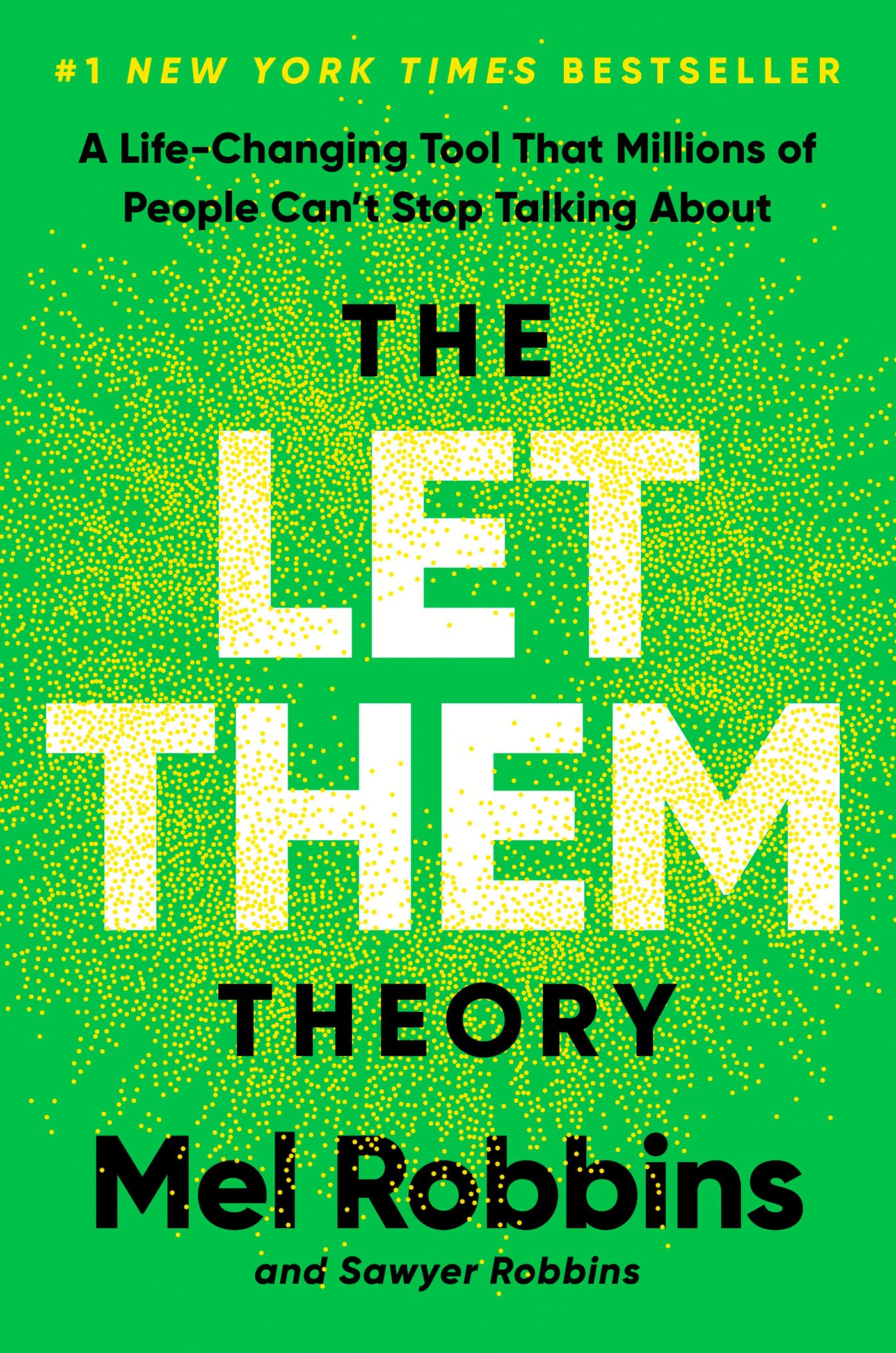
The Let Them Theory: A Life-Changing Tool That Millions of People Can’t Stop Talking About
Metadata
- Title: The Let Them Theory: A Life-Changing Tool That Millions of People Can’t Stop Talking About
- Author: Mel Robbins and Sawyer Robbins
- Book URL: https://amazon.com/dp/B0D978YKXT?tag=malvaonlin-20
- Open in Kindle: kindle://book/?action=open&asin=B0D978YKXT
- Last Updated on: Friday, April 24, 2026
Highlights & Notes
I simply moved before my brain had the chance to talk me out of it. It’s like launching a rocket: Once you start the countdown, 5-4-3-2-1, there’s no turning back.
remember what a revelation it was when I thought to myself, Wait a minute, I can feel horrible and still do what I need to do? Yes, Mel, you can. And it worked.
I started calling this countdown technique the “5 Second Rule.” It’s so simple: The moment you have an instinct to act, you have to physically move within five seconds, or your brain will talk you out of it. Just start counting backward—5-4-3-2-1 and move. Take action before hesitation kicks in. Here’s why it works: Counting backward requires focus and snaps you out of autopilot, giving you just enough of a push to get going. It helps you power through fear, doubt, or procrastination. Every time you count 5-4-3-2-1 it is like tipping the first domino. Momentum kicks in, and BOOM, you are no longer thinking about what you need to do, you are already doing it. And the best part? Once you start moving, it’s way easier to keep going.
The 5 Second Rule taught me that action is the answer. Thinking about your problems will never solve them. Waiting around to feel like doing something means you’ll never do it. It taught me that no one is coming to save you. You must save yourself from yourself. You have to force yourself to make little moves forward, all day, every day, especially when you don’t feel like it.
The problem with waiting is no one is coming. The only permission you need is your own.
Learning how to push yourself to take action when you are afraid or full of self-doubt or overwhelmed with excuses is a life skill you can learn. Once you master it, you’ll understand that you can achieve anything through small, consistent moves forward.
most of us are just trying to do our best to get ahead, pay our bills, raise a family, fall in love, have more fun, and reach the potential of our lives. We’re just looking for simple ways to be a little happier and make our lives a little better. And we’re not only looking for those resources for ourselves—we are looking for the people in our lives who need them too.
You’ll never feel ready to change your life. One day, you just get tired of your own excuses and force yourself to do it. You’re never going to feel like going to the gym. One day you just make yourself go. You’re never going to feel like having that hard conversation. One day you just get sick of avoiding it, and you force yourself to have it. You’ll never feel like looking for a better job. One day you just push yourself to start looking.
The 5 Second Rule changed my relationship with myself. The Let Them Theory changed my relationship with other people.
What is stopping you from doing what you need to do or living your life the way you want to live it? What are you afraid of? I was shocked when I discovered the answer for myself: It was other people. Or rather, how I was letting other people impact me. I was spending too much time and energy managing or worrying about other people. What they do, what they say, what they think, how they feel, and what they expect from me. The reality is, no matter how hard you try or what you do, you cannot control other people. And yet, you live your life as if you can. You live as though, if you say the right things, people will like you. If you keep taking on more work, your boss will respect you. If you act in the right way, and cater to what your mom wants, and also keep your friends happy, somehow you’ll find peace. You won’t. In this book, you’ll learn how two words—Let Them—can set you free. Free from the opinions, drama, and judgment of others. Free from the exhausting cycle of trying to manage everything and everyone around you. There is a better way to live.
If you’re struggling to change your life, achieve your goals, or feel happier, I want you to hear this: The problem isn’t you. The problem is the power you unknowingly give to other people.
stop wasting your time, energy, and happiness trying to control things you can’t control—like other people’s opinions, moods, or actions—and, instead, focus on the one thing you can control: you.
When you stop managing everyone else, you’ll realize you have a lot more power than you thought—you’ve just unknowingly been giving it away.
The truth is, other people hold no real power over you unless you give it to them. Here’s why this works: When you stop trying to control things that aren’t yours to control, you stop wasting your energy. You reclaim your time, your peace of mind, and your focus. You realize that your happiness is tied to your actions, not someone else’s behavior, opinions, or mood.
Learning how to let adults be adults has changed my life. And it will change yours too, because when you finally stop giving your power to other people, you’ll see how much power you truly have.
That’s the cruel fact about time. It’s going to keep passing, whether you slow down or not. The time that you have with the people that you love is like a melting ice cube.
The only thing we can do is make the most of the time that we have with the people that we love while we have it.
Let. Them. It’s their prom, not yours. Stop controlling it or judging it, or managing it, and LET THEM.
Brain space that was once overflowing with dumb worries, annoyances, and drama was now available for more important things.
Let Them. So much time and energy is wasted on forcing other people to match our expectations. And the truth is, if somebody else—a person you’re dating, a business partner, a family member—if they’re not showing up how you need them to show up, do not try to force them to change. Let Them be themselves because they are revealing who they are to you. Just Let Them and then you get to choose what you do next.
All human beings have a hardwired need for control. We all have an innate desire to control everything about our lives: our time, our thoughts, our actions, our environment, our plans, our future, our decisions, and our surroundings. Feeling in control makes you feel comfortable and safe, so naturally you try to control everyone and everything around you—oftentimes, without even realizing it.
No matter how hard you try, you will never be able to control or change another person. The only person you are in control of is you. Your thoughts, your actions, your feelings.
Intellectually, I knew this, but emotionally I was devastated.
Let Them wasn’t about giving in. It was about releasing myself from the control I never had in the first place. Because here’s the truth—no matter how much I tried to analyze the situation or how many ways I could try to control or fix it, nothing I did would change what had happened.
the urge to control things comes from a very primal place: fear. Fear of being excluded, of not being liked, of things falling apart if we’re not steering the ship.
I’ve felt that fear a lot in my life. Fear that if I didn’t make things happen, I’d be forgotten. Fear that I wouldn’t be liked or accepted. Fear that without me at the helm, things would unravel. And let’s be real—control gives us the illusion of safety. When we’re in control, we believe we can protect ourselves from pain, disappointment, rejection. But it’s just that—an illusion of safety. Because no matter how much we try to control people or situations, the truth is, we can’t. People will do what they want to do. They’ll make their own choices, live their own lives.
that “control” actually makes you feel better. In fact, it has the opposite effect. Trying to control people and situations doesn’t calm your fears. It amplifies them. Any psychologist will tell you, the more you try to control something you can’t, the more anxious and stressed out you become.
In Stoicism, the focus is on controlling your own thoughts and actions—not
Buddhism and Radical Acceptance teach that suffering comes from resisting reality.
Detachment Theory teaches us how to emotionally distance ourselves from situations that trigger us.
True power lies in our response.
choosing peace is not weakness—it is power.
‘Let them’ doesn’t mean giving away control; it means reclaiming it. By choosing how we respond—by not feeding anger, hatred, or negativity—we exercise the ultimate power over ourselves.
You always have power, no matter what is happening around you.
By refusing to react with bitterness, we reclaim our power and shape a better future.” The word choosing matters. You reclaim your power by choosing how you respond.
Letting go feels like you’ve lost. You’re surrendering to something beyond your control. Let Them is the opposite: it’s strength. When you say Let Them, you’re not giving up or walking away. You’re releasing that grip you have on how things should go and allowing them to unfold the way they will go. You’re freeing yourself.
Let Them show you who they are. Their disrespect doesn’t say anything about you. How you respond does. Stop asking why they are doing this. The question is, why do you want to be with someone who does this to you? You don’t. Don’t waste your energy chasing someone who’s already left. Focus on what you can control: processing your emotions and reminding yourself that you deserve someone who treats you with respect.
How exactly is feeling morally superior going to help you create those great friendships? It’s not.
The source of your power is not in managing other people; it’s in your response. When you say Let Me, you’re tapping into that power by taking responsibility for what you do, think, or say next. Let Me makes you realize that you are in control of what happens next and that life is more fun and fulfilling when you’re not sitting alone in your superiority.
That’s why the theory only works if you say both parts. When you say Let Them, you make a conscious decision not to allow other people’s behavior to bother you. When you say Let Me, you take responsibility for what YOU do next. What I love about Let Me is that it immediately shows you what you can control. And there’s so much you can control: Your attitude … your behavior … your values, your needs, your desires, and what YOU want to do in response to what just happened.
The more you allow people to live their lives, the better your life will get. The more control you give up, the more you gain.
Every time I say Let Them, I am acknowledging that my kids are capable and stronger than I think. The Let Me part reminds me that my job is in supporting, listening, and guiding, not controlling. That said, I am still the parent, so there is a balance between trusting, letting them, and providing the support they need and stepping in when necessary.
When you’re an adult, your life, happiness, health, healing, social life, friendships, boundaries, needs, and success are all your responsibility.
And any time you spend blaming other people, or waiting for permission or an invitation, is wasted. Those days are over. It’s time to take full responsibility for your happiness, your dreams, and your life. After all, responsibility is simply the ability to respond. And as you’ve just learned, true power lies in your response.
The more you let other people live their lives, the better your life gets. — Mel Robbins
Your time and energy are your most valuable resources,
You can’t control what is happening around you, but you can control how you respond to
You can’t control what other people say, think, or do. Anytime you try to, you lose your power. You must learn to focus on what you say, think, or do. That’s how you remain in control.
stress is way bigger than just the tension you feel in your body. Stress is a physiological state in your brain.
When life is normal and you’re feeling good, your prefrontal cortex is the one driving most of your actions. This means that you can logically think through the pros and cons of situations and make well-thought-out decisions. In other words, you can choose how you are going to respond. But, whenever something happens that makes you feel stressed, this is where you and I get in trouble because the response in our bodies and brains is automatic. Your amygdala takes over automatically. And this part of your brain has two jobs: survival and self-preservation. Your brain and body kick into fight or flight, and are only designed to work in this stressed-out state for short periods of time. You are supposed to reset back to normal functioning, where your prefrontal cortex is in control and you feel calm and confident again.
The life you’ve always wanted is right in front of you, but you will never reach for it if your inner critic is constantly telling you not to. Stress is a major problem
The moment you say Let Them, you are signaling to your brain that it’s okay: This isn’t worth stressing about. You are telling your amygdala to turn off. You are resetting that stress response by detaching from the negative emotion you feel. Here’s how you do it: The moment anything happens that stresses you out, say Let Them. Put yourself in pause. Then say Let Me and take a breath. Let Me take another breath. Slow your stress response. Calm your body and brain down. Take control and regain your power.
Focusing on what you can’t control makes you stressed. Focusing on what you can control makes you powerful.
Every time you say Let Them, you acknowledge that you cannot control this situation that is stressing you out.
If you want to achieve your goals, be more present, feel more confident, and be happier, you must stop allowing other people to stress you out. In life, there will be things you can control, and things that you can’t. There will be situations that are fair, and situations that are not. You get to decide what stresses you out and for how long.
According to research, work is the #1 cause of life stress for most people—and your manager has as much impact on your mental health as your spouse.
You are way smarter than that. Your life and the possibilities in it are always way bigger than your current job.
Your company is not the only company on this planet, and there are a million bosses out there who would be ecstatic to help advance your career. Let Me go get
Your career is your responsibility and you have more power here than you think. It’s time to start acting like it.
And consider this: If you stay in that job, who controls your future? That’s right. Your boss Steve. But if you update your resume, start networking, and go on some interviews, who’s in control now? That’s right. YOU. You can act like a toddler and call your boss every name in the book, but the harsh truth is that you’re the one to blame—because you are choosing to stay in a job that makes you miserable. That’s on you. And you want to know what else is on you? Your dumb excuses for why you are not looking for another job. You have so much more power than you think. It’s time to start acting like it.
When you say Let Them, you stop trying to control what someone else is doing. When you say Let Me, you take responsibility for how you respond to it, which is not always obvious.
The point here is, every situation is different, but one thing remains the same: You always get to choose how you respond.
Let Me is an opportunity for you to put your time, energy, and values at the center of your life. It’s where you get to choose what’s worth your attention and what isn’t.
If it matters, be the one everyone else is waiting for. Create the change you want to see. That’s the power of Let Me. I like to remind myself of what Professor Margaret Mead said: “Never doubt that a small group of thoughtful, committed citizens can change the world; indeed, it’s the only thing that ever has.”
When you say Let Them, you make a decision not to allow other people’s behavior stress you out or bother you. When you say Let Me, you reset your stress response and take responsibility for how you respond.
When you navigate your life trying to predict what people are going to think and say about you, you give your power away.
What if you gave yourself permission to live your life, and you gave other people permission to think whatever they want about it? What if you pour your time and energy into your hobbies, your habits, your happiness?
Build a simple website with photos of you on a stage, plus a description of your keynote and the main takeaways. Get testimonials from a few event planners at past events you have spoken at and put them on the website. And then most important: Start posting about speaking online. Turn your social media into your marketing. Post photos from events. Post content related to your speech. Post photos with the event planners that hire you. Social media is how people find you. Social media demonstrates that you are a player in this industry. And social media is what will lead people to that one-page website so they can book you.
Every time you edit what you post, or stay silent in class or at work, or hide in the back of the group photo, you are engaging in self-rejection. You’re the one telling yourself that you’re not good enough. The constant questioning, editing, deleting, overthinking, and asking other people, “Does this look good?” only magnifies your self-doubt. And you want to know the crazy part? You’re doing it to yourself.
It is physically and neurologically impossible for you to control what someone else thinks. The average human being has about 70,000 thoughts a day. Most of which are random and cannot be controlled. Which is why it’s ludicrous to waste any of your energy worrying about what other people think or trying to change what they think.
everybody has critical opinions about people they love as well as total strangers. It is a fact of life. Embrace it and accept it. Instead of trying to change reality, start using it to your advantage. Let Them. Here’s another truth: Just because someone has a negative opinion doesn’t mean they feel negatively about you as a whole. I can think a bad thought about my husband and still love him and treat him with so much respect and kindness, because two things can be true at once. You can be annoyed by the way someone is acting and still love them to death.
Adults will have negative opinions about you and everything you do. Let Them judge. Let Them react. Let Them doubt you. Let Them question the decisions you are making. Let Them be wrong about you. Let Them roll their eyes when you start posting videos online or you want to rewrite the manuscript for the 12th time. Instead of wasting your time worrying about them, start living your life in a way that makes you proud of yourself. Let Me do what I want to do with my one wild and precious life.
When you let the fear of what people might think dictate your choices, you limit your potential and hold yourself back from pursuing what you truly want.
Let Them think what they want. Let Me do what I want.
Let Me live my life in a way that makes me proud. Let Me make decisions that align with my values. Let Me take risks because I want to. Let Me follow the path my soul is turning me toward.
When YOU are proud of yourself, you hold all the power.
In life, you don’t want to be a doormat, but you also don’t want to be an inconsiderate bulldozer. It’s a balance.
Someone is always going to be disappointed by the decisions that you make. Don’t ever let it be you that’s disappointed. And don’t let guilt drive your decisions.
Most of the time, it’s how your family shows you that they care. They want more for you. They want you to be happy and they see all your potential when it’s going to waste. However, it can very easily cross the line from caring to control.
Frame of Reference is a fancy way to say “understanding the lens through which somebody sees something,” and it works beautifully with the Let Them Theory.
In fact, we were both right. Because we have different Frames of Reference.
What I love about this idea of stepping into someone else’s Frame of Reference is that understanding where someone is coming from may not change their opinion or yours, but it will deepen the connection that you have while you navigate your relationship.
the fact is, most human beings have never done the work to understand themselves, heal their past, or manage their own emotions. If they haven’t done that for themselves, they are incapable of doing that for you and showing up in a way that you deserve.
When you say Let Them, you make a decision to let people think negative thoughts about you. When you say Let Me, you focus on the one person whose opinion truly matters—yours. You get one wild and precious life, so go live it in a way that makes you proud.
The reality is adults are as emotional as children, and it is not your responsibility to manage someone else’s reactions. As long as you let other people’s emotional immaturity dictate your choices, you’ll always come last in your own life.
Other people’s emotional reactions are not your responsibility to manage.
adults, at their core, are just as emotional as children. The difference is, they are better at hiding it … most of the time.
Child Behavior = Adult Behavior Children run away from you Adults avoid confrontation Children sulk or pout in the corner Adults give the silent treatment Children shut down Adults act stoic Children throw tantrums Adults erupt, rage text, and vent Children slam doors Adults slam doors too Children lie Adults lie too
Adults are 100 percent responsible for the emotional and physical needs of children. Children cannot give themselves the emotional and physical support that they need. It is your responsibility to help a child regulate their emotional responses in a healthy way. It is also your responsibility to teach a child that emotions are normal and how to process them.
It’s your responsibility to help a child create space to process their own range of emotions. But it is not your responsibility to manage another adult’s emotional reactions.
“hoping someone will change is what keeps you trapped in a relationship with someone who is emotionally immature or worse, emotionally abusive.” This has nothing to do with you. This person is not changing. You are the one who needs to change.
Let Them go silent. Let Them erupt. Let Them play the victim. Let Them sulk. Let Them deny that it happened. Let Them make it all about them. Then, Let Me. Let Me be the mature, wise, and loving adult in this situation. Let Me decide if I want to address this directly or not at all. Let Me remind myself that managing another person’s emotions is not my job. Let Me remove myself from any text chain, dinner table conversation, relationship, or friend group where this is happening. Instead of expecting other people to change, demand the change of yourself. Hold yourself to a higher standard and stop allowing this type of emotionally immature behavior to be your responsibility to manage.
It’s not about being perfect; it’s about being kind to yourself and continuing to grow.
Emotions are just a burst of chemicals in your brain that ignite and are absorbed into your body within six seconds. Because your emotional reactions happen so fast, they can often be completely unconscious. You may first notice your emotions through the physical sensations that accompany the chemical burst, such as sweating, muscle tightness, or a racing heartbeat. Research shows that most emotions will rise up and then fall away within 90 seconds if you don’t react to them.
You will never be able to control what is happening around you. You will also never be able to control your emotional responses, because they are automatic—just like how your stress response turns on automatically. But you can always choose what you think, say, or do in response to other people, the world around you, or the emotions that are rising up inside of you. That’s the source of all your power.
When the stakes feel this high, the right answer always feels wrong.
Just because the right decision seems clear, doesn’t always mean it’s an easy decision to make. That’s because the human experience is largely an emotional one. What seems logical on the surface doesn’t feel logical when you know it will cause other people a lot of pain.
There will be many times in your life when people are going to be mad, disappointed, or heartbroken by the things you say or do. There just will be. You have to be able to separate yourself from your emotions and the emotional reactions of others when you’re determining the right decision to make. You can’t let your emotions drive your decisions, because they will often stop you from making the right decisions.
Adults are allowed to feel how they’re going to feel—and they’re allowed to be angry. Broken. Devastated. Overwhelmed. Shocked. Embarrassed. And extremely pissed off at you. You can’t control it. But you try to control it by avoiding the truth. We’ve all done this. It’s why you’ve found yourself staying in the wrong relationships or the wrong jobs or the wrong patterns of behavior for years.
It feels easier to avoid it, because avoiding it means that you don’t have to face it. But easier now makes it way harder later. Avoiding the hard conversations now won’t make them any better next year. In fact, from experience I can tell you that the longer you wait, the more painful it gets. Choosing not to do what’s right for you will do nothing but cause you more pain.
In life the most courageous, honorable, and kind thing to do is tell someone you don’t want to be with them. It’s hard to be honest, especially when other people are emotionally immature.
It’s not your job to protect everybody else from feeling emotions. Your job and responsibility is to live your life in a way that is aligned with your values and what you know deep down is true for you.
Let Me is the part where you remind yourself that this too shall pass. You are stronger than anyone else’s emotional reaction. Let Them have their opinions. Let Them have their reactions. Let Me have mine. Let your emotions rise up and give yourself the space to process your emotions too.
It’s time to grow up and act like a mature adult.
The fact is, every human being is dealt a different hand in life and you can’t control the cards that someone else is holding. The more time you spend staring at someone else, the more you miss the entire point of the game. In life, you’re not playing against anyone. You’re playing with them. Someone will always have better cards than yours. And while you’ve been busy comparing yourself to everyone else, you’ve missed one of the greatest secrets in life: Other people teach you how to be a better player, and that’s how you win.
The hand you’ve been dealt may not feel fair. But it’s still yours. And what you choose to do with it? That’s where your power is. Winning the game of life requires you to focus on the cards you have and choosing what to do with them.
The problem isn’t the tendency to compare. The problem is what you’re doing with the comparison that matters. So ask yourself: What are you doing when you compare? Are you torturing yourself, or is it teaching you something important?
Here’s how you know it’s fixed. Is there anything you can do in the next 30 seconds to change this? If not, you’re never going to be able to change these things. It’s critical that you understand the difference between things you can and cannot change, because comparing yourself to someone or some aspect of their life that you cannot change, no matter how much you try, is just torturing you.
anytime you try to control something that you can’t, it just makes you feel more out of control and powerless.
And here’s how you know that comparison is good: You’re looking at aspects of someone else’s life or success that you could create for yourself. With time and consistent effort, these aspects of your life, career, or health could be changed.
I looked at people around me and saw other people’s wins as my losses. And when you see other people’s wins as your losses, it will make you feel defeated before you even start.
Let Them wake you up. Let Them be successful. Let Them dazzle you with their beautiful web design.
Other people have this beautiful capacity to show you pieces of your future that you cannot fully see for yourself yet. They show you possibilities that you didn’t realize existed or told yourself you are incapable of achieving.
In life, if you’re not motivated to do something, it’s going to take something painful to force you to change.
So whoever it is that’s triggering you, Let Them. Let Them irritate you. Let Them burn you up. And Let Them show you EXACTLY what you want and what you need to be doing to get there.
Tom Brady recently said about success, “The truth is you don’t have to be special. You just have to be what most people aren’t: consistent, determined, and willing to work for it.”
This is the moment you stop trying to control what others think, feel, or do—and start using your time and energy to create the best chapter of your life.
The truth is, your life is your responsibility. If you want financial success, it is your responsibility to create it.
You have a beautiful and amazing life to live. You have potential beyond your imagination. You are not limited by where you live, or the circumstances you are facing, or the aspects of your life that you believe are limitations.
When you say Let Them, you learn from other people’s success and Let Them lead the way. When you say Let Me, you focus on playing the cards in your hand, turning inspiration into action, and winning by playing with others, not against them.
The more you release your expectations, control, and the need to fix others, the more your relationships will flourish. It’s never too late to find amazing friends, make amends, strengthen family ties, or create the love you’ve always dreamed of. How exciting is it that the most meaningful moments of your life and the deepest connections are just around the corner?
Your childhood trained you to believe you’d always be invited, friendship would be easy, that you’d see your friends all the time—and something fun would always be going on.
There are three factors that I believe make great friendships possible: proximity, timing, and energy. These pillars are the invisible foundation every friendship is built on.
It’s easier to blame someone else, and sit in your anger, than it is to take responsibility for yourself.
Assume good intent.
adult friendship isn’t something that happens. It’s something you create.
Good friends make you happier, healthier, and bring your life meaning, and friendships are one of the things you’ll cherish most as you go through your life.
When you say Let Them, you release the need to cling to friendships that no longer serve you, making space for connections that truly matter. When you say Let Me, you take charge of your social life, reaching out, initiating, and cultivating the kind of friendships that reflect your values and bring you happiness.
The reality is, people only change when they feel like changing. It doesn’t matter how much you want someone to change. It doesn’t matter how valid your reasons are. Or that you are right in your opinion that they should change. Or how big the consequences are if they don’t change. If someone doesn’t feel like changing, they won’t. And worse, when you pressure someone to change, it just creates more tension, resentment, and distance in your relationships.
Here’s the truth: When you push someone, it only makes the person push back. You’re working against the fundamental law of human nature. People need to feel in control of their decisions. You want people in your life to change, but pressuring them creates resistance to it.
every time you fight against human nature you will lose.
I mean, when you want someone else to change, don’t you just kind of assume that it would be easy for them to … just do it?
The fact is, change is hard for everyone, including you. No one wants to feel pressure from you, because they are already feeling it from themselves.
Change is never a cakewalk. If it were fun and easy, the person you love would already be doing it.
Truth #1: Adults only change when they feel like it. Stop trying to motivate people. It doesn’t work. Based on the research, the motivation to change must come from within the other person.
The problem with motivation is it’s never there when you need it. If motivation were automatic, everyone would have six-pack abs, a million dollars in the bank, and the world’s best side hustle. Plus, if you could magically make people “feel like doing” whatever you want them to do, you’d be practicing mind control … not motivation.
Truth #2: Human beings are wired to move toward what feels good. Another reason why pressure doesn’t work? Humans are wired to move toward what feels good right now and to move away from what feels hard in the moment.
What you need to know, according to Dr. K, is simply that a human being will always feel like choosing what is pleasurable now and avoid what feels painful. In the moment, the work it takes to change is painful and hard. That’s why no one is motivated to change—even when they know it’s good for them in the long run.
because he doesn’t feel like it. Dr. K told me that when we pressure other people to change, “We are spending our whole lives swimming upstream. Instead of understanding our motivational circuitry, we are trying to conquer it. Instead of utilizing it, we’re trying to fight against it and overcome it.” When you pressure someone, you’re fighting against the wiring of the human brain. Remember, people are wired to move toward what feels easy and pleasurable now. Dr. K says that in order to make a change, a person must be able to separate themselves from the pain they will feel in the moment and the action that they need to take. That means while he is sitting on the couch, he is going to have to say to himself, “This is going to suck to exercise, but I’m going to do it anyway.” He has to do it. He has to separate himself from the pain. He has to decide to override his feelings and push himself to do it. You can’t do that for someone else. So Let Them sit on the couch.
Truth #3: Every single person on the planet thinks they’re the exception.
one of her findings is groundbreaking: that people believe that warning labels, threats, and known risks do not apply to them.
Everyone thinks they are the exception to bad outcomes happening to them. Which explains why your tears, pleading, and ultimatums will also backfire. Our brains quite literally tune out the worst-case scenarios—which is why the contempt-filled sighs aren’t doing anything. They think they are the exception. (And by the way, so do you, when it comes to changes you are resisting in your own life.) By being passive-aggressive, constantly bringing it up, or using threats as a way of trying to pressure someone else to change, it will always backfire.
It means that all those threats, worst-case scenarios, passive-aggressive comments, eye rolls, and scare tactics aren’t even registering in the other person’s brain. You are wasting your time, your words, and your breath. No wonder you are so frustrated and stressed out by the situation!
Since you’re coming from a place of judgment, not acceptance, you’re not thinking about all those little moves he needs to make to go to the gym, and how painful it’s going to be. You’re not thinking about him walking into the bedroom, changing into workout clothes, filling up a water bottle, finding his keys, driving to the gym, walking all the way inside the gym, finding a machine, and then actually having to do the work. Instead, you jump over the reality, the science, and the truth about how hard change is for everyone—and you jump right into anger over the fact that they aren’t doing what you want them to do right when you want them to do it. In reality, what that situation requires is compassion, not contempt … and your audible sigh of disgust and bad mood isn’t going to launch them off the couch. In fact, those sighs of contempt are going to keep your spouse lying on the couch until they’ve lost the remote in the cushions. No matter how loving your intentions are behind the audible sighs, your spouse is feeling like you’re trying to fix him—which feels more like pain, which means he’s now going to move away from you. It makes him feel defensive, and that’s just going to close him off from feeling like changing even more.
Pressure doesn’t create change—it creates resistance to it. When you try to exert control over someone else’s behavior, they instinctively resist your attempt to try to control them. Instead of inspiring change, your pressure creates a battle over control.
Feeling like you’re in control of your life is what makes you feel safe. Feeling in control is what makes everyone else in your life feel safe too. That means your spouse, your roommate, your mom, your boss, and your friends all have that same hardwired survival instinct to be in control, just like you do. The people that you love only feel safe when they feel in control of their own life.
Acceptance of another person, as they are, is the foundation of a healthy and loving relationship. When someone feels that you accept them as they are, they feel safe with you. The opposite happens when you pressure, change, criticize, push, or expect someone to behave differently than they are. This pressure puts you and your loved one in a battle for control, whether or not you realize it.
Change is hard for everyone. And it’s even harder when you have someone breathing down your neck, and you not only have to deal with their pressure, but you’ll also have to admit that they were right when you finally end up doing the work.
it needs to be THEIR idea to change, not yours.
People only change when they are ready to make that change for themselves. Stop punishing them for not changing on your timeline. Stop trying to “motivate” them into doing something they clearly don’t want to do.
The first change in your behavior is to stop pressuring and start accepting. Let Them be. When you accept them as they are, the frustrating and ineffective battle for control ends and you set yourself up to win the war for positive change. It’s science.
Decades of research from neuroscientists and psychologists say that you can’t motivate someone to change, but you can “inspire” them to change and even make them believe it was all their idea to do so.
Model the behavior change you want to see and walk the talk you’ve been asking for. If you have ANY shot at influencing them to move toward the behavior or change you want them to make, you need to show them how easy it is.
Model the behavior you want to see. What I love about this research is that it’s a sneaky way to get someone else to change and believe it was their idea.
First, Let Them be. Stop pressuring them to change. Accept that you can’t control their behavior or actions. Adults only do what they feel like doing. Your job is to accept them for who they are and where they are. Let Them be. Then, Let Me.
Focus on yourself, model the behavior and the positive attitude because it works for you, and hold out the hope that the magic of your influence will work on them. Be prepared to give it six months or more.
In the ABC Loop, you have three steps: A: APOLOGIZE, then ASK open-ended questions. B: BACK OFF, and observe their BEHAVIOR. C: CELEBRATE progress while you continue to model the CHANGE.
the situation. And that is your goal: to make them feel the tension between their current behavior and what they actually want.
People do well when they can. Not when they want to do well, but when they can. By asking all these open-ended questions, you might just discover that the person you love wants to do well, they just don’t think they can right now. It’s not an issue of motivation. What’s in their way is a lack of belief in their ability to change—they don’t think they can. I love this because it shifts you from a place of judgment to compassion, and it creates space for true connection and change to happen.
That’s why you have to give this time. It takes time for tension to transform into motivation. Let Them be.
Space allows them to come to the idea for themselves. Time allows the tension to transform into motivation.
We are wired to move toward what feels pleasurable, easy, and fun.
Humans move toward immediate positive benefits such as celebrations. So often, we approach change with negative reinforcements, threats, pressure, and fear, when the real success lies in being accepting, compassionate, and showing your support in a genuine and effective way.
Adults only do what they feel like doing. Your power is in your positive influence.
Problem: Pressure doesn’t create change; it creates resistance to it.
Truth: Adults only change when they feel like changing.
What human beings want is to feel acceptance and love. They need to be in control of their own thoughts, actions, and decisions. Your power is in your influence. Solution: Using the Let Them Theory, you will leverage the laws of influence to unlock someone else’s intrinsic motivation to change for themselves.
Let adults be adults, and let your influence inspire them to change.
When people are struggling, they have a lot of shame and are often in denial about it. They already feel like a burden and often tell themselves they are letting everyone down. Which is why people often don’t ask for help or open up about what is going on.
As much as you may love someone and believe in them and would do anything in the world to make their pain go away, you cannot want someone else’s sobriety, healing, or health more than they do.
The more you try to rescue someone from their problems, the more likely they will continue to drown in them. Allowing someone to face the natural consequences of their actions is a necessary part of healing. The fact is, adults only get better when they are ready to do the work, and you will be ready way before they are. It sounds harsh, but it’s true.
There is a difference between supporting an adult who is struggling and supporting a child who is struggling. When you are dealing with a child, you are responsible for their emotional, financial, and physical support. When you are dealing with an adult, you are not.
People only heal when they are ready. And if they haven’t, it’s because they aren’t ready. When someone you love is going through an internal struggle, they will not get better for you, their kids, or their family. They have to want to get better for themselves.
In times of struggle, what the other person needs is acceptance. Let Them struggle.
Yes, they need your love and support. But here’s the hard part: They do not need to be “rescued.” I will say this again: The more you try to rescue someone from their problems, the more likely they will continue to drown in them. The more you judge someone for their behavior, the better they will get at lying to you about it. It’s imperative that you realize that rescuing someone isn’t supporting them, and enabling someone’s self-destructive behavior isn’t loving them. There is a thin line between what constitutes support, and what is enabling people. Enabling is when you justify or support someone’s problematic behaviors because you think you’re helping them. For example, it can include things like giving money to an adult child who is not using it responsibly and is not looking for a job. It can look like covering for people because they were out drinking last night, making excuses for your spouse’s anger, or ignoring the problem to avoid conflict.
Allowing other adults to face and feel the natural consequences of their actions is one of the most important steps of healing.
helping others doesn’t mean solving their problems for them—it means giving them the space, support, and tools to do it themselves.
You can’t want somebody’s sobriety or their healing or their financial freedom or their ambition or their happiness more than they do. You will be ready for your loved one to get better, way before they are. Which is why you need to remain in control of your response to the situation. You are not dealing with someone who is capable of rational thought or healthy decision-making.
That is why the people you love can find themselves struggling with the same demons for years. They would love to get better. They probably doubt that they can.
I once heard an addiction specialist say that no one gets sober until being drunk is more painful than facing the thing you are running from. Hearing that made so much sense for me and it can help you move from a place of judgment into a place of understanding and compassion. That person needs pain in order to galvanize the will to change.
I’ve made this mistake. I thought, If I can just make their life easier, I make change easier, right? Wrong.
if it’s easier to avoid the problem, they will never face it.
When we let people face the real-world consequences of the choices they make, they hopefully learn from them.
Look at people’s struggles as an opportunity to support them in discovering their strengths. If someone learns that they are too weak to face their struggles, they will never experience what is truly possible.
If you are giving financial support to someone in an attempt to help them through a hard time, you better be very clear about the conditions upon which you are giving that support. If you give money without conditions, it will lead to massive resentment on your end. The money is not a gift. And unconditional love does not mean unconditional financial support. Often unconditional love means withdrawing financial support.
It happens when you’ve “tried everything.” Nothing is working. You are suffering. And then it hits you: There is one thing I haven’t tried: I haven’t stopped subsidizing their life. At some point, you’ll realize that by paying someone’s rent, bills, tuition, or giving them a place to live without any conditions, you are enabling their self-destructive behavior.
You owe people love, acceptance, and compassion. You do not owe them money. Because if you’re funding any aspect of someone’s life while they continue to refuse treatment, or won’t get a job, or don’t attend classes, or continue to lie or steal or be engaged in shady, avoidant behavior—you are part of the problem. Money without condition is enabling.
Let Them struggle. Let Them violate the terms of your support. And then, Let Me cut them off financially. Very few people are willing to do this, because it feels cruel. That’s why throwing money at a situation is so common. But removing your financial support is the only thing that will work.
You don’t get to have someone else fund your life and then have an attitude when they have an opinion about how you’re using their money.
The first step to changing your life is taking responsibility for the fact that your life isn’t working. That’s why you need to let the people that you love face reality, not help them run from it.
Ask yourself, How can I create an environment that makes change and getting better easier?
Let Them doesn’t mean leave them alone.
People avoid healing because they do not believe they can face the pain they are running from. So Let Them borrow their belief from you. Because when someone feels accepted, loved, and supported, it’s easier for them to believe in their ability to step back into life too.
helping others doesn’t mean solving their problems for them—it means giving them the space and tools to do it themselves.
When you say Let Them, you trust and empower others to handle their difficulties while understanding that facing hardship is a necessary part of growth. When you say Let Me, you focus on providing support without taking over while creating the environment and tools necessary for another person to get better for themselves. Believe in their ability to heal, and create an environment where change is possible.
When the heart is involved, logic goes out the window.
People choose who and how they love, and sometimes it won’t be you. But never forget: You get to choose who and how you love too. You get to choose who is worth your time and energy, and you get to choose how you want to be treated.
Remember: You will find the right relationship by saying no to the wrong ones. The faster you say no, the faster you will be saying yes to the love of your life.
One question that you can always ask yourself to snap out of the dating fog is: If your best friend were being treated this way, what would you tell them?
Let Me remind myself that I don’t want to be dating someone who is not choosing me back. One of the most important signs of a healthy relationship is that it is mutual. Mutual effort. Mutual respect. Mutual feelings. Mutual attraction. Mutual interest.
You must let their behavior be the clear message. Letting Them is the easy part. Let Me is the hard part, because you don’t want to see the truth. Let Me see them for who they are. Let Me accept the truth in their behavior—I am not a priority. Stop choosing to chase people who clearly do not want to be with you. If they are not making an effort, they are not worth yours.
If the relationship is meant to be, this conversation will make it stronger. A real conversation only destroys something that is fake.
Anytime you find yourself questioning whether or not this is the right relationship for you, ask yourself: Can you accept this person exactly as they are, and exactly where they are, and still love them?
People only do what they feel like doing. Yes, you can influence them. But if you keep wanting them to change, and they don’t, it not only weakens your love. It creates resentment. What I have noticed with couples is that the longer you are together, the more you want your partner to be like you. That’s not fair. So be honest with yourself. Do you want them to be just like you, or is it that one of your fundamental needs in the relationship is not being met?
Sometimes in life, the most loving thing you can do is to stop fixing, start accepting, be more loving, and focus on what you can control. And what you can control is choosing to love someone as they are.
Ask yourself: Could you be with this person for the rest of your life if they never, ever change?
relationships are about learning how to love someone for who they are, not for who you wish they could be.
two things are required to make a relationship go the distance: Both people want the relationship to work and are both willing to work on it to make it better. The issues that create problems do not require either person to give up their dreams or compromise their values.
two things that are required to make a long-term relationship work: Both people want the relationship to work and are both willing to work on it to make it better. The issues that create problems do not require either person to give up their dreams or compromise their values.
a fundamental truth: A relationship doesn’t make you worthy of love. Your existence does. You will spend your entire life from the day you are born to the day you die with only one person: you. You are the only love of your life.
Let Them be them, so you can finally Let Me be me.
Let Them be who they are. But more importantly, let yourself be who you truly are. Let Me prioritize my own happiness. Let Me pursue my dreams with passion. Let Me set boundaries that protect my peace. Let Me choose relationships that uplift and inspire me. Let Me love myself enough to walk away when it no longer works.
You are the love of your life. And the life you create—full of meaningful relationships, joy, and fulfillment—begins with how you choose to love yourself. Let Me.
When you say Let Them, you accept people as they are, and you accept their behavior as the truth. When you say Let Me, you choose how love shows up in your life.
You’ve been trying to control the uncontrollable, trying to force the world to conform to your expectations. But what if, instead, you focused on your own response to whatever the world throws your way? You can’t change the weather. But you can change how it impacts you.
The people and situations around you are like the weather. The fact is, you can never control other people—how they think, how they act, whether or not they love you, or how fast they check you out at the grocery store. So why on earth would you ever give them that level of control over you that you have been? Why would you ever entrust something as precious as your confidence, your peace of mind, your happiness, and your dreams to the whims and moods of the people around you?
Stop trying to change people who don’t want to change. It’s time to let adults be adults. Stop trying to rescue those who are struggling. It’s time to let others heal how they need to heal. Stop wasting your time trying to get people to love you. It’s time to choose the love you deserve. It’s finally time to reclaim your power and reclaim your life.
You are responsible for defining what matters to you. You are responsible for telling the truth even when it’s really hard. You are responsible for paying for your life. Nobody owes you anything, but you owe yourself everything.
Let Me get started. Let Me take a risk. Let Me write the book. Let Me be honest about what I want. Let Me get in the best shape of my life. Let Me apply for the dream job. Let Me stop giving love to people who don’t want me back. Let Me create a better life. A life that makes me proud. A life that makes me happy. A life where I use my precious energy to enjoy every single moment I will have.
It’s all based on how YOU show up in that role. Having a good boss is what creates good teams. It’s not the size of the budget, the perks, or even the talent—it’s the person leading the team. A good boss can unlock potential, drive engagement, and make a team unstoppable. A bad boss? They do the opposite. They stifle creativity, destroy trust, and create toxic environments where no one can thrive.
there’s a big difference between guiding your team and controlling every move they make. When you micromanage, you suffocate innovation, erode trust, and make it impossible for your team to grow. In other words, a controlling boss is a bad boss.