The Lion Tracker’s Guide To Life: A Transformative Guide to Finding your Purpose
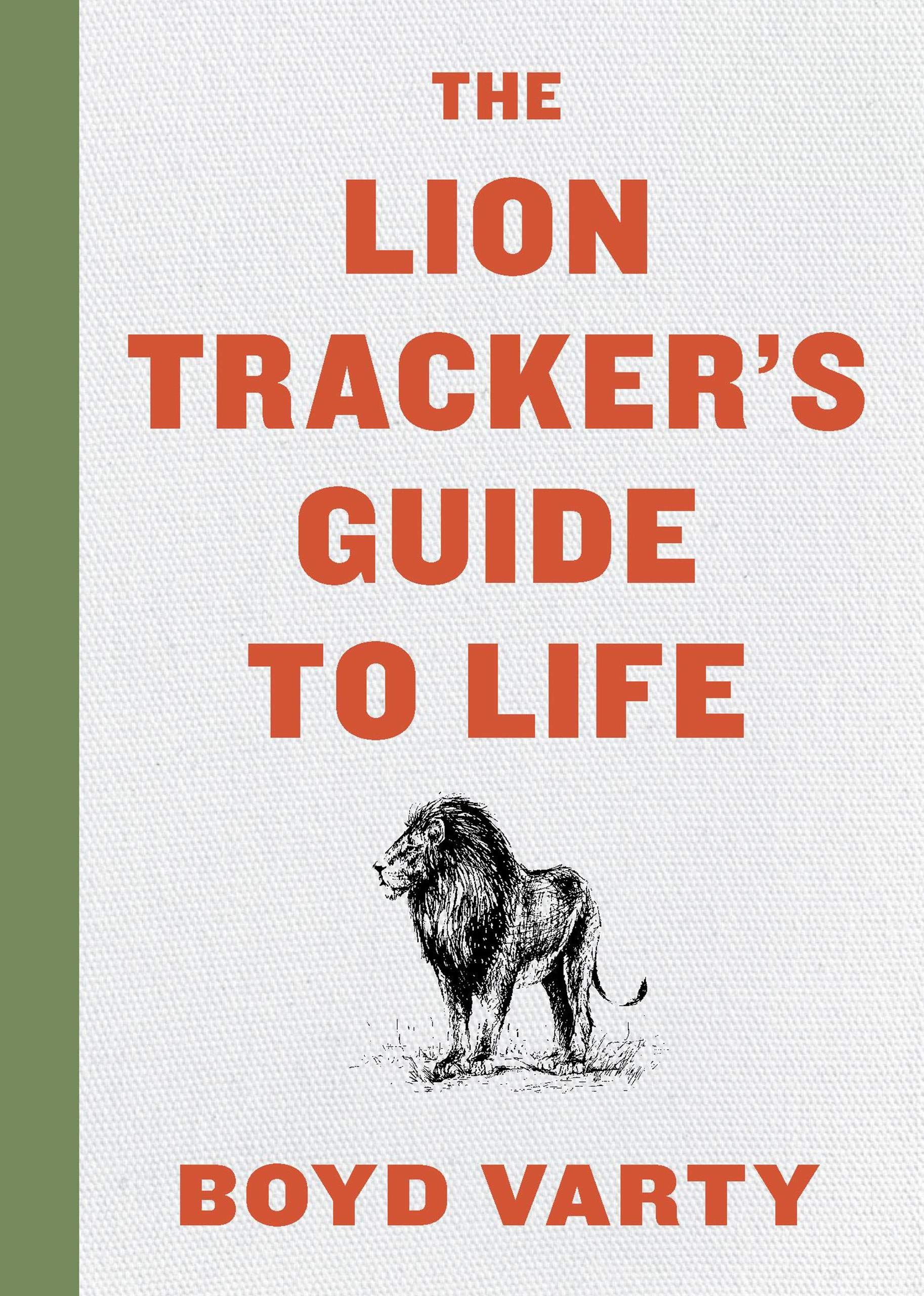
Metadata
- Title: The Lion Tracker’s Guide To Life: A Transformative Guide to Finding your Purpose
- Author: Boyd Varty
- Book URL: https://www.amazon.com/dp/B07LC9C7Q4
- Open in Kindle: kindle://book/?action=open&asin=B07LC9C7Q4
- Last Updated on: Friday, October 16, 2026
Highlights & Notes
intelligent, and nothing in the wild needs a coach to help it discover what it truly is. If we had lost our way in the modern world—our sense of value, direction, and belonging—it was because we had lost contact with something more instinctual, more innate.
To track is to discover that nature is alive and speaks a language all its own. To track is to travel the trail of an animal and weave yourself into the tapestry of its story. It is an art that lives inside us, a way of being in union with the natural world.
We have forgotten that life holds a unique story for us all. A thread made up of faint signs that lead to the manifestation of something unique. What the native people call “your medicine way.” Something that only you can give to the world. Inside you is the wild part of you that knows what your gift, purpose, and mission are. That part of you is wild and elusive. It cannot be captured, as it is always evolving. To live on its trail, you must become a tracker.
He has achieved one of the hardest things to achieve in our time: a freedom from judgment about how and who he should be.
He doesn’t understand the mindset of saving. Save for what? Life is immediate. There is no future. If you have money, you spend. If you have food, you eat.
In America, many men in the groups I have facilitated have told me that they feel like they are sleepwalking through their lives. Going through the same routines, falling asleep into social media or the news. They are experiencing a kind of disengagement that makes them feel older than they are. I suspect that part of being a man is that you will as a matter of course fall asleep in your own life. It will happen. Knowing this seems important to me. The journey out of that will begin not with the call but with the desire to hear the call. The desire itself has an energy. Part of waking yourself, it seems to me, is made by paying attention. Most of us are looking but not seeing. The same men who had told me about falling asleep in their lives reported amazing things when they turned their attention back on and started to tune in and listen for a path back to life. The ancients call this essential knowledge. As trackers our part is to be awake. Our part is to listen. We want to hear the call. Tracking begins with wanting to track.
Too much uncertainty is chaos, but too little is death.
Nature doesn’t see status or wealth or social position. It cares only about presence, one’s ability to read the signs, navigate the terrain, and translate the language of the wilderness. Nature is the great equalizer.
That’s how mentors should be made: not through titles or words but through actions. On the ground, in the face of a leopard, one feels acutely alone. To be guided in a moment like that, with such extreme stakes, creates a bond that is rare in modern life.
What Alex was most struck by was that Renias never shamed or belittled him about falling over and dropping his rifle. The bush had been the teacher and there was nothing more to say.
There’s a low-lying depression and anxiety plaguing modern life—a symptom of an undiagnosed homesickness to feel a belonging to the greater ecosystem and know ourselves in relation rather than isolation.
Later in my life, I would come to realize that becoming aware of such information and the feelings it evokes—the people who are important to you, the things that bring you to life, the arrival of something meaningful—is its own kind of consciousness: track awareness. You can easily miss this information if you don’t know how to see. Track awareness is how attuned you are to what is around you. It is recognizing a track when it appears. It is teaching yourself how to see what is important to you.
“You must train yourself to see what you are looking for.” Part of why this isn’t as simple as it sounds is that it’s not rational. You can’t think your way to a calling. Finding what is uniquely yours requires more than rationality. You have to learn how your body speaks. You have to learn how you know what you know. You have to follow the inner tracks of your feelings, sensations, and instincts, the integrity and truth that are deeper than ideas about what you should do. You have to learn to follow a deeper, wiser, wilder place inside yourself. Track awareness is the ability to read the field of life with discernment and yet also know your inner landscape. Everything in the natural world knows how to be itself. Trees know how to greet the spring with buds, and bees are drawn naturally to flowers. Leopards from birth know they are keepers of solitude, while lions are made for the pride. We are a part of nature, and inside each of us is a wild self that knows deeply what it is meant to do. Inside each of us is a natural innate knowledge of why we are here. Tracking is a function of directing attention, bringing our awareness back to this subtle inner trail of the wild self, and learning to see its path. Yet most of us have so much of the social conditioning of modern life that the track of the wild self has been lost. We live with our attention directed outward. We focus on the social cues of our culture. We look to others to define our path and value and purpose. We lose ourselves in shoulds. Shoulds are full of traps—traps laid by society and your limited rules for yourself. No wild animal has ever participated in a should. What you know to do is deeper than that. No one can tell you what your track will be or how to know what calls you and brings you to life. That’s your work to do. But a great tracker can ask: How do you know you love something? How do you feel when you are fully expressing yourself? Learn that feeling and then start looking, not for the thing, but for the feeling. It’s there if you can tune yourself to it, if you can learn to see how the field of life is always speaking to you. Attention shapes the direction of the tracker’s life. We must turn our attention back to the wild self.
The father washes onto the son. He lives inside you as an aspiration, a disappointment, or a fear. Afraid you will never be like him or afraid you will be; he is there in the bones of your emotions. In the voices in your head. In your expectations of yourself. In the shadows of your weakness or strength. No matter how good the relationship, there is a tension between father and son. The father is a track: a trail we choose to follow or a path we walk away from.
Renias’s father was a dangerous man who beat his sons. As a result, Ren had a conditioned awareness born of this danger. They say that the children of alcoholics know what the night will hold by the sound of the keys hitting the hallway table. They develop a sharp perception for signs, sounds, and even the feeling of a room. Sometimes our medicine comes in strange ways. Renias’s childhood with his father meant he didn’t miss a thing. It gave him what he would need to be a skillful tracker as well as superior social skills. He was able to notice the subtleties of social interaction and quickly put people at ease. In his travels around the globe with Alex, he was able to fit into foreign social interactions by being easily attuned to people and social cues. Ren’s quality as a tracker was made of this awareness. His father had taught him to notice and deduct; as a tracker these skills were always with him.
But there it was: the inclination to go into life that had been with him his whole life. The gift of wild tenacity that his father had given him.
Trauma can travel, but so can healing.
Mentorship in men is often a kind of transmission born of physical proximity; the teaching is not spoken but absorbed.
In its purest form, the archetype of the father guides you to be your best. We were finding a way through mentorship to give this to each other. It was a deep time for me. I felt myself learning. I felt the gratitude of being taught. When someone shares with you, you become someone who wants to share. The competence I felt growing in me was a kind of remedy to the shame I had felt.
Before that day, I had always thought that I needed to be somebody in the world. That rhino and the path he walked told me something different: don’t try to be someone, rather find the thing that is so engaging that it makes you forget yourself.
The track of the father is to find him within you. To find what he gave you and what he didn’t give you. You must use both sides. The medicine of transformation is innately built into this relationship.
I am struck by how disconnected we are from the body. Obsessed with thinking, modern culture has forgotten the innate knowledge of the body. How its signals are a guide, how it knows what it needs to be healthy. How it can tell you if something is right for you or not by the way it feels. We must learn to read the subtle tracks of the body, the way it relaxes and opens when something feels right, the contraction and tightness when we are not where we are meant to be.
He is supremely confident. Rather than criticizing and tearing down, the voice inside him motivates and builds. It is what in the world of coaching we call supportive self-talk. “I don’t know where we are going but I know exactly how to get there,” he says.
I don’t know where we are going but I know exactly how to get there
Joseph Campbell said, “If you can see your whole life’s path laid out then it’s not your life’s path.” In the bush and in life, we don’t get trails fully laid out. We get tremendous unknowns and, if we are lucky, first tracks. Then next first tracks. In my own life, I have often struggled with the first track. Full of grand visions and the desire to do something great, I often couldn’t find the first small beginning and then the next small beginning. I couldn’t dial huge possibilities into small practical actions. I couldn’t trust that doing enough of what needed to be done today would, with time, render a path and an outcome that could be great. I had to learn to be in the process of transformation, not trying to be transformed. You can’t skip past creating to the creation.
The journey to transformation is a series of first tracks. I don’t know where I’m going but I know exactly how to get there.
The hazard of modern times is the danger of no danger.
Seeing someone who simply doesn’t have the social programming you do is profound because it forces you to see that a huge part of what you might think of as “this is how I am” or “this is what you do” is not you at all but patterns of behavior and thinking you have adopted from the cultural story. You have been told what to be and want. This realization is immense as it is the beginning of a much deeper question about what we actually want. You are your outlook, and that outlook is not universal. It was given to you.
I transition from endless doing into a steady being.
In complete solitude, I stop objectifying myself. In the bush I don’t think of myself on some social hierarchy. I don’t define my value as a comparison with others. The birds and animals don’t judge me. It’s a kind of healing in which I become human again. In complete solitude, we are not a concept of ourselves; we are ourselves. It was St. Francis who said, “Wherever you go, preach the gospel; when necessary use words.”
There is a neurochemical hit that comes with tracking, something akin to a runner’s high. I have often thought that if people the world over could track on weekends it might spell the death of golf and soccer and mountain biking. We are a species that belongs within stories. We are the meaning-making animal. Tracking is a narrative that can help us reimagine why we are here.
It’s hard to know when to stay on a trail and when to divert. It’s hard to know when the lesson is to persist and when the lesson is to let it go. I think of all the angst I have felt between choices. I’ve been paralyzed by options and the idea that there is a single right way. Ren is more Zen; for him the only choice is the one he has made. He knows any choice will set something in motion. This is the magic of the bush and life. You use your intention, take action, and let go. The bush teaches us that the lesson is more about discovery than being correct. On the trail there is not one way; the only mistake is to not make any choice. As it is in life.
Lao Tzu said in his ancient text the Tao Te Ching, “When nothing is done, nothing is left undone.” I suspect he was pointing to this state of completeness, when one is absolutely present in life. The mastery is that there is no trying. One ventures off the edge of the map here. There is no prescribed route, yet we know this place when we see it. We can feel it in great dancers and innovators and athletes. Yogis have spoken about it for thousands of years.
Perhaps this is always the highest pursuit of the trail: aliveness itself.
The men I admired made choices against all convention and rationale. They followed something deep within. They tracked what called and opened new trails of transformation.
The natural world, like a great Zen roshi, is profoundly impartial. It meets life as it is without judgments or assumptions or wishes for something different. It is at one with itself. There is an intelligence that runs through things. To be a tracker is to be aligned with that intelligence. Carl Jung referred to “synchronicity” as a simultaneous co-arising of something in the outer world with something deeply meaningful to your inner life. The place in space and time where your non-local spiritual self, vast and unhindered, meets your human self in a moment of meaning specific to you.
Watching them move, I decipher a code of instructions for when you lose the trail: Accept that losing the track is part of tracking. Go back to the last clear track. There is information there. Walk up ahead checking any open terrain and bare ground. Open your focus. Any place you don’t find a track is not wasted, but part of refining where to look. Flow for a while on your best guess, alert, listening, noticing.
I think of all the people I have spoken to who have said, “When I know exactly what the next thing is, I will make a move.” I think of all the people whom I have taught to track who froze when they lost the track, wanting to be certain of the right path forward before they would move. Trackers try things. The tracker on a lost track enters a process of rediscovery that is fluid. He relies on a process of elimination, inquiry, confirmation; a process of discovery and feedback. He enters a ritual of focused attention. As paradoxical as it sounds, going down a path and not finding a track is part of finding the track. Alex and Renias call this “the path of not here.” No action is considered a waste, and the key is to keep moving, readjusting, welcoming feedback. The path of not here is part of the path of here. Coaching, I have learned, is just a kind of inner tracking. And it often begins when people have lost the track. It is learning a different way of moving out of a lost or stuck place. In its simplest form, coaching begins by asking a person, “How does that make you feel?”
The core of coaching does have a powerful central premise: your beliefs about life are not reality. A great coach asks you to question your deeply held beliefs and rules for yourself. You can go only as far into the experience of creating life as the limits of your personal belief system will allow.
Track what makes you feel good and bring more of it into your life. Notice what makes you feel lousy and do less of it.
I have come to learn that losing the track is not the end of the trail, but rather a space of preparation. The whole process is contained here as a pure potentiality. Prepare yourself to hear the call, invite the unknown, look for the first track, tune in to the instrument of the body, and learn to see the track amidst many that brings you to life. All of these dynamics must lie latent in you as you look for the next track.
In some deep way, the ceremonial spaces he made were places that taught people how to return to a more natural way of being. They acted as containers that tore away our conditioned layers of defense, social patterning, and emotional blocks so that people could experience, sometimes for the first time, the truth of who they were.
help people heal in order to find their way back to their own guidance. And during this time, I was changing too. A very strange calling was emerging in me. The deeply held ideals about what I should be were giving way to an experience of myself. I could never have imagined that this was where my path would take me, but I knew I was on a trail following a track: the track of the wild self inside me. I discovered my gift was to be with people in a way that could help them move toward a more authentic version of themselves. I was at the fringe, for sure, but I felt a tremendous fullness in what I was doing. It felt deeply fulfilling and important to me. To my surprise, compensation was coming with it. The more in tune I got with my calling, the more I found people willing to pay me to be with them. I saw very deeply how I could travel around remaking my home. I saw how healing perpetuates itself. My life as a safari guide had given way to a different type of guiding.
If something is all you have ever known, you mistakenly believe that’s just how it is. Perhaps this is the greatest danger, that we don’t even recognize another way.
The restoration of the planet will come out of a profound shift in human consciousness.
If it is true that we are one great being, then inside each of us is the chance for a different world.
A song drifts into consciousness. A song from the earth asking to be deciphered by all those who have ever longed to find what they are looking for. Listen now, in stillness, underneath the uncertainty and rage and desolation. You may hear its lilting call in the longing of your heart. This is the song of the tracker.
There was clearly some method to how he had cut off the road where he had, but he couldn’t articulate why. It was just the nature of his experience, and at some point this had become a sense beyond language. The only way to learn it was to be near him so that over time his approach might become your own.
We can’t afford to lose the old ways, for in them live clues to a forgotten harmony and wholeness. They are the skills that can help us remember ourselves and the intimate belonging of all things. They help us remember how to be human.
There is no fat in nature. Everything exists on the limits of its necessary entropy.
I have often spent an afternoon with a pride watching them from a safari truck and then gone home as night falls and a fierce Lowveld thunderstorm rolls in. As blades of lightning smash down and the thunder goes nuclear, I have lain in bed thinking the lions are out there in the storm. There is no coming home to shelter. That is wildness.
Everything in modern life seems to be about security. We are constantly sold our own fears. We strive for security, but at what cost?
know that one of the great dangers of my life would be to live without danger. In our encounters with the edges, we come to know ourselves more deeply. Neurosis is a substitute for real suffering. Fearfulness is the most common state in a life that asks for no real courage.
I know that fear has something to teach me.
“Any pain, you can fix with walking. Just walk, you can be fine.”
To be outside the band of hunter-gatherers meant you had been shunned by the village. Deep inside, we want to belong. This remains true today, but maybe for the first time in human history, modern society—the dominant culture—has become the thing that isolates us. If you could track your way out of the burdens of modern life and create an existence that is much more an expression of who you are, then your own life could become a living mythology. One that could inspire others.
“The miracle is not walking on the water; the miracle is walking on the earth,” said the teacher Thích Nhất Hanh. “The miracle is all around us as the awareness of life itself.”
I hear Joseph Campbell: “People are not looking for the meaning of life, they are looking for the feeling of being alive.” If that was it, I had found it.
It is a kind of energy I have witnessed in people who have merged “work,” “mission,” and “meaning.” These people don’t take holidays or need days off. They outwork everyone not from some kind of gritty determination, but from a place of pure pleasure.
Tracking is a doorway into a flow state. Flow is a psychological state defined as full engagement in a task.
This moment is complete and it contains perfectly all the moments that have been and all that will ever be.
You who have longed for and felt called to make a different world. You who have suffered the illnesses of society. You who have risen to the top and found it empty. You with a desire to serve. You who have felt called to nature and to the creatures of the earth. You are the tracker.
You are here to live. Your life can be the beginning of a great change; and it must be.
Let them track a great healing inside themselves. Let them track their purpose in the world. Let them find what restores them. Give them a new old way to think about their life. Let them track forward into a new mythology for the world to live inside.
Step off the superhighway of modern life and go quietly onto your own track. Go to a new trail where you can hear the whisper of your wild self in the echoes of the forest. Find the trail of something wild and dangerous and worthy of your fear and joy and focus. Live deeply on your own inner guidance. There is nothing more healing than finding your gifts and sharing them.
At high levels of any art form, the practical gives way to the mystical.
We are a society that lives in denial of death and so we are a society that denies life. But out here, how flimsy we are, with no boundaries between us and nature. What a wonderful teacher of how to live. In the face of fear is also something like awe. Then after the awe, humility. Humility is the liberation from illusions of dominance, control, and power. I give up the importance of my life to instead become a part of life.
life. If you track your authentic life and uncover its meaning, it will catalyze other possibilities for living, and what’s important to you will immediately change. Meaning doesn’t want more; when you’re in deep touch with your wild self, you know you have enough and are enough. From that place of enough, you act in service, because that’s what feeds you.
that not doing it would feel profoundly wrong. Open yourself to the unknown. Develop your track awareness. Amidst all of the information that surrounds us, learn to see what is deeply important to you. Use the feelings in your body as a guide. Live on first tracks.
Even if you don’t know where it’s going, play with it. Find friends to track with, lose the track, keep trying things, get feedback. Find your flow and remember to see how many unexpected things come into your life by living this way. It will be scary at times. Let the fear bring you to life. I suspect that if you give yourself the room to live each day as a tracker, a deep calling to serve will emerge. So my friend, as you read this, let this be a call to you. It’s time. Go track.