Time Blocking: Strategic, Buffer and Breakout Blocks
Scope: The time-use discipline of The 12 Week Year: three block types, the “ideal week”, and the argument that results follow time allocation. For the surrounding execution cycle see The 12 Week Year.
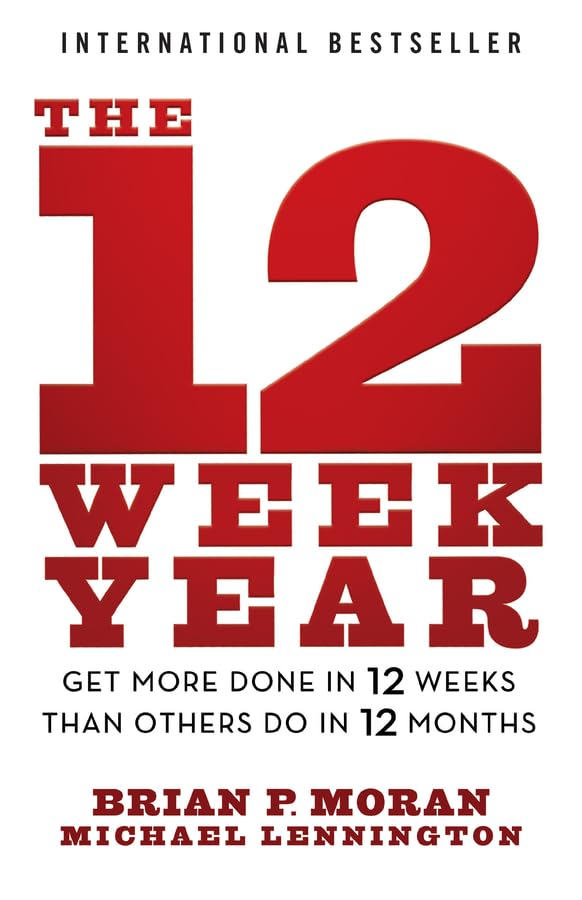
The Premise
“what most often keeps you from being exceptional is not a lack of time, but the way you allocate the time that you have.”
“If you are not in control of your time, you are not in control of your results.”
Most people “satisfy the various demands of the day as they are presented, spending whatever time is needed to respond without giving much thought as to the relative value of the activity.” The authors’ fix is to schedule performance time in advance, so that the plan, not the inbox, triggers action. Thoreau is quoted on the stakes: “It’s not enough to be busy; so are the ants. The question is: What are we busy about?”
The Three Blocks
| Block | Length and frequency | Purpose |
|---|---|---|
| Strategic | Three hours, one per week; early in the week and at a naturally low-activity time | ”work on your business, not in it”: preplanned, strategic and money-making activity |
| Buffer | 30 minutes to one hour, one to two per day | Contain “unplanned and low-value activities—like most email and voicemail” |
| Breakout | At least three hours, “spent on things other than work” | Refresh so you return “with more focus and energy” |
Strategic block rules
During the block “you accept no phone calls, no faxes, no emails, no visitors, no anything.” Scheduling it early matters “so that if one gets interrupted or cancelled, you have time to reschedule it.” Pitfall 2 is multitasking inside the block: “multitasking lowers your overall productivity and your results.”
Buffer blocks
They exist because interruptions are inevitable; the block moves them into a container rather than trying to eliminate them. The size “will depend upon the amount of email, phone calls, interruptions, and other ‘administrivia’ you normally are required to handle.” Typical placement: one in the morning, one near the end of the day (the book’s example is 11:00-12:00 and 4:00-5:00).
Breakout blocks
Counterintuitive for productivity literature: “To achieve greater results, what’s often necessary is not actually working more hours, but rather taking some time away from work.”
Building the Ideal Week
- Block 15 minutes first thing Monday to review last week and plan this one.
- Place the three-hour strategic block.
- Place buffer blocks.
- Place the breakout block.
- Fill in other important activities.
“The more you can create routine in your days and weeks, the more effective your execution will be.” Routine tasks go “at the same time, on the same day each week, if possible.” Order of placement matters: strategic first, then buffer, then breakout.
Breakthrough Requires Different Allocation
“Reaching a breakthrough isn’t about being incremental. Breakthroughs require a profound change in the way that you work before it shows up in your results.”
“People earning 100,000. In fact, they are sometimes working less—but they are working differently.”
(The 100,000 comparison is the authors’ illustration, not data.)
Pitfalls
Conducting business as usual; multitasking in strategic blocks; letting technology steal attention; and “You think being busy is the same as being productive.”
Same diagnosis, different prescription than Cal Newport
Pseudo-Productivity and Deep Focus reach the same conclusion that busyness is not output. Moran and Lennington prescribe a fixed weekly quota (one 3-hour strategic block) rather than reducing overall workload; the two are complementary, not competing.